Score
End of ‘The Line’: A timeline of Saudi Arabia’s failed rendering city
The halt of construction on The Line in Saudi Arabia underscores the importance of aligning ambitious brand strategies with practical realities and economic viability. As the project shifts focus from a grand vision to more feasible developments like Oxagon, brands must learn that overreaching concepts can lead to significant setbacks if they ignore foundational principles of sustainability and market demand.
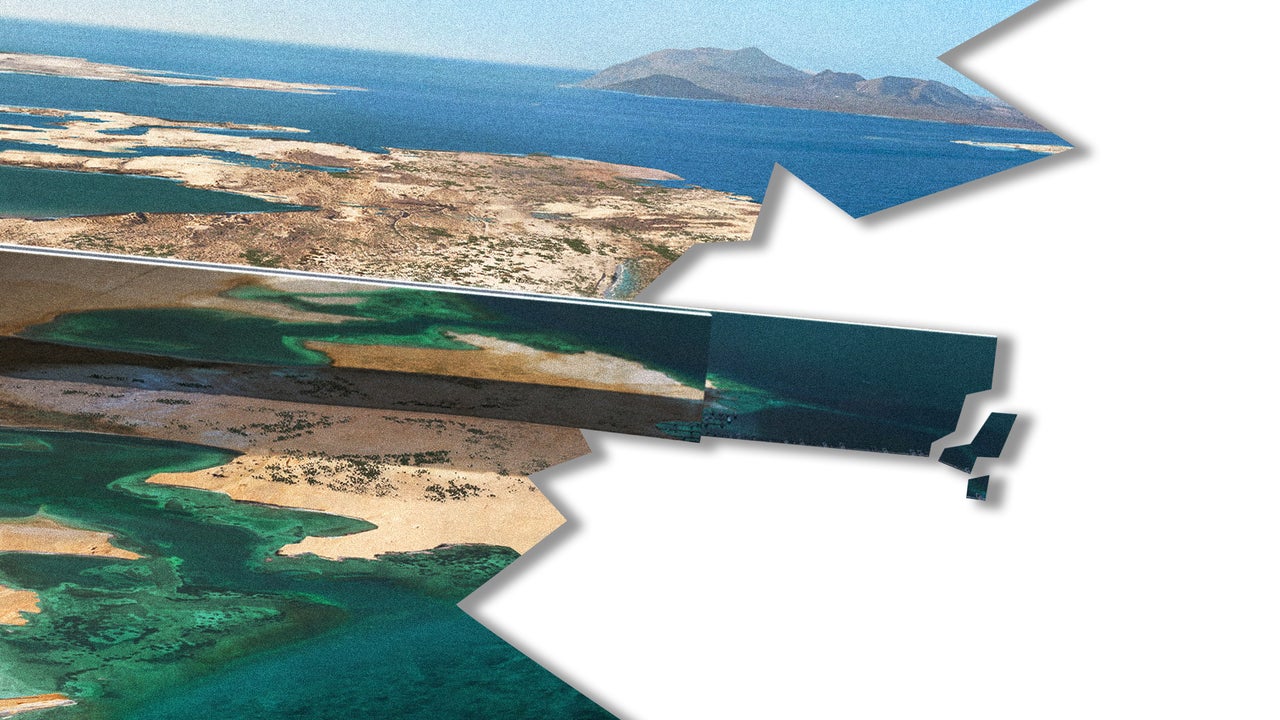
FastCompany: Saudi Arabia has halted construction on The Line, the over-hyped megacity that was supposed to slice through the sand like a mirrored sword, until 2030—LOL!—after multiple delays and downsizings . Anyone with two functioning eyes and three ounces of brain tissue could have predicted this spectacular crash. The concept blatantly defied basic physics and economics. It was a sci-fi fever dream doomed the second it left the rendering farm. Rendering ca. 2024. [Image: Neom] The Line began as a supernova of corporate promotion.
In 2021, Crown Prince Mohammed bin Salman officially launched the enterprise as the utopian cornerstone of Vision 2030, a $500 billion national program meant to modernize the country and wean it off oil. He intended the project to be a car-free smart city capable of housing nine million residents within two parallel mirrored groundscrapers measuring 105 miles long, 1,640 feet high, and 656 feet wide.
The Line, like the rest of the architectural and engineering development projects in the Tabuk Province, in Saudi Arabia, is managed by Neom, a state-owned company that claims it “is building the foundations for a new future.” Urban planning skeptics immediately pointed out that building a massive linear city was a patently absurd proposition , citing historical precedent, the laws of physics, and economics that simply do not support a massive, sideways skyscraper — much less one stretching across a barren desert.
Yet, the kingdom pushed forward, digging giant holes in the middle of nowhere until the sheer magnitude of the idiocy became impossible to ignore. The pivot to practicality The utopian glass house finally shattered under the weight of financial reality. Saudi spending, which grew astronomically under MBS, is actively being redirected toward immediate, practical infrastructure to weather a growing national deficit exacerbated by a weaker economy and the economic fallout of the Iran war. Vanity projects aren’t making the cut.
According to a strategic review led by Neom’s chief executive, Aiman al-Mudaifer, the linear city was previously expected to cost more than $1 trillion. The Saudi public investment fund has mandated that the newly scaled-down enterprise must generate actual financial returns rather than just consume capital. Instead of focusing on an inland desert city, the kingdom’s priorities have shifted to the coast. There, Saudi Arabia still intends to invest about $3 billion in Oxagon, an industrial zone with a port on the Red Sea that has gained strategic importance for trade planning following the closure of the Strait of Hormuz.
This is where the government is expanding its capacity to deliver water, electricity, and digital connectivity. It’s a practical move. The Oxagon upgrades are meant to attract artificial intelligence companies to build data centers. The utilitarian rationale for this coastal shift is pretty simple, okay? Data centers need water for cooling and Oxagon is on the coast. Top: a rendering of the planned Oxagon development. Bottom: Satellite view of the early development of Oxagon, Neom’s planned octagonal industrial city on Saudi Arabia’s northwest Red Sea coast, October 2025.
Article truncated for readability. Read the full piece →
The article discusses a significant project in Saudi Arabia that highlights the need for practical brand strategies, making it impactful for the industry, while its insights on sustainability and market demand are relevant and somewhat novel.