Score
A SpaceX rocket will crash into the moon on Wednesday. It’s a symptom of something much worse
The impending crash of a SpaceX Falcon 9 rocket stage into the moon highlights the urgent need for responsible space debris management as lunar exploration accelerates. For brand strategy, this situation underscores the importance of sustainability and ethical practices in branding, especially for companies like SpaceX that are shaping the future of space travel and exploration.
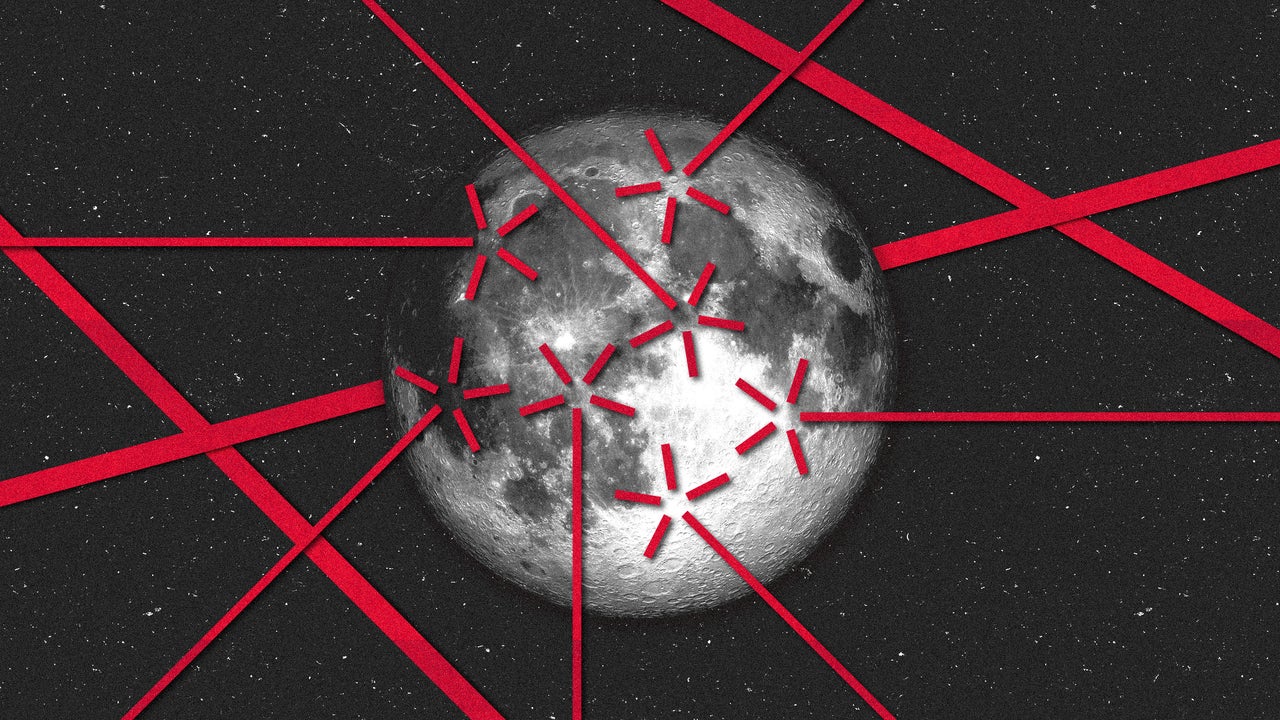
FastCompany: The upper stage of a Falcon 9 rocket is now zooming through space at 5,400 mph on a direct collision course with the moon. It will leave a small crater and a plume of lunar debris near Einstein Crater, on the sunlit western limb of the moon. You may think that’s fine. It is not, not really. The moon is not Manhattan, sure, but that doesn’t make this any less concerning. The problem is that this will continue to happen until it gets dangerous to humans. According to astrophysicist Jonathan McDowell, “This impact will not be a problem.
But in a future where there are long-term bases on the moon, similar impacts would be an issue and we need not to leave rocket stages in chaotic orbits of this kind.” Unless we stop SpaceX, Blue Origin, and other space organizations in the U.S. and China from recklessly using space, we will keep hearing these stories until something really bad happens. These companies must design their mission plans to dispose of any trash in a safe way, now and forever. The new race to the moon will continue to increase its pace throughout the twenty-first century.
The United States and China are competing to put bases and mine operations on the lunar surface within the next several years. Robot fleets and astronaut crews will be roaming the moon, and billions of dollars will be spent on the regolith in search of riches. Keeping humans—and all that expensive infrastructure—safe will depend on a predictable orbital environment. Path to collision The upper stage of a Falcon 9 is a cylinder that stretches 45 feet tall and 12 feet in diameter.
It lifted off on January 15, 2025, from Launch Complex 39A at Florida’s Kennedy Space Center, carrying two privately built lunar landers: Firefly Aerospace’s Blue Ghost, which completed the first fully successful lunar touchdown ever achieved by a private spacecraft, and ispace’s Resilience, which was destroyed during its landing attempt. Being expendable—meaning it was not designed to return to Earth like the space shuttle and concepts like Aspire Space Technologies’ Oryx —the stage never returned to Earth after deploying its payloads.
It remained in a highly elliptical orbit that periodically carried it beyond the distance of the Moon’s orbit. While hitting the Moon was never part of SpaceX’s plan, subtle forces including solar radiation pressure gradually reshaped its path over the months following its launch. That eventually pushed it into its current collision trajectory. “The orbit of the Moon and of this object, roughly speaking, intersect,” explains space tracking expert Bill Gray, who computed the impact prediction. “Usually, one goes through the intersection point while the other is someplace else.
But on August 5, they’ll reach that point at the same time.” That moment arrives August 5 during the early morning hours, within a few minutes of 2:35 AM U.S. Eastern Daylight Time. Because the Moon has no atmosphere, the stage is expected to reach the lunar surface intact rather than breaking apart. It will strike at an estimated 5,400 mph, a velocity equivalent to seven times the speed of sound at an angle of 34 degrees from the vertical, matching the force of the detonation of three tons of TNT and making a crater about 90 feet across and 16 feet deep.
Article truncated for readability. Read the full piece →
The article addresses a significant issue in space exploration that has implications for branding and sustainability, making it relevant for brand strategy professionals, though the topic of space debris is not entirely new.
Weekly digest
Get the Signal digest
Every Monday morning — the top 3 brand trends, 10 high-signal articles, and one emerging signal to watch.
No spam. Unsubscribe anytime.