Score
How NASA designed the Artemis II space suits for a worst-case scenario
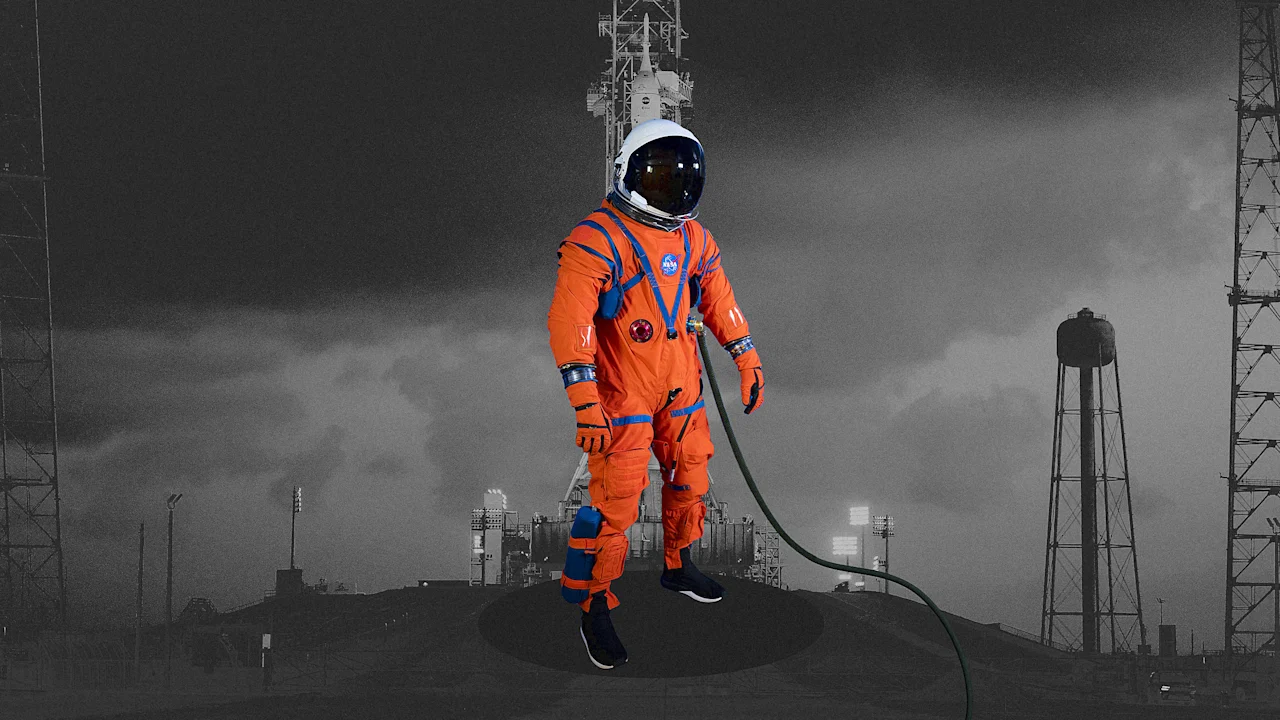
NASA's design of the Orion Crew Survival System (OCSS) suits for the Artemis II mission emphasizes the importance of safety and functionality in brand strategy, particularly in high-stakes environments. By integrating advanced life support features and emergency protocols directly into the suits, NASA showcases how innovation and user-centric design can enhance brand trust and reliability in critical missions.
FastCompany: “Houston, we have a problem.” The misquoted phrase is so ingrained in popular culture that it has become the standard comeback to any unexpected mishap. It’s also the last phrase NASA’s Artemis II mission control wants to hear in the coming days because, unlike those of us on Earthly terrain, an astronaut midway to the moon won’t be muttering it after they accidentally burn their toast. A four-person crew took off from Kennedy Space Center in Florida on April 1 for NASA’s first lunar flyby since Apollo 17 in 1972.
The organization has done everything it can to ensure the safety of the astronauts, knowing that any harm to the courageous humans could set its lunar program back many years, or cancel it altogether. One part of its insurance policy is a new space suit that’s designed to sustain the Artemis II crew for six days—enough time to go to the moon and back—in case there’s a catastrophic event in their Orion spacecraft.
The Artemis II crew (in orange, from left) Jeremy Hansen , mission specialist from the Canadian Space Agency; mission specialist Christina Koch ; pilot Victor Glover ; and commander Reid Wiseman in their Orion Crew Survival System (OCSS) suits for a multiday module training in July 2025 [Photo: Rad Sinyak/NASA] A lifeboat in a space suit When Jack Swigert, command module pilot of Apollo 13, radioed “Houston, we’ve had a problem here” on April 13, 1970, an oxygen tank explosion had just severely damaged the spacecraft just 56 hours into its journey to the moon.
The astronauts on board couldn’t simply pull a U-turn 200,000 miles away from Earth. And since they didn’t have enough oxygen, Swigert, along with commander Jim Lovell and lunar module pilot Fred Haise, abandoned their crippled spaceship and hunkered down inside the lunar lander, using it as a makeshift lifeboat for the harrowing trip home. But the Artemis II mission—a roughly 10-day loop around the moon—flies without a lunar lander. If the Orion capsule’s hull breaches for any reason and vents its breathable air into the void, the crew has nowhere else to go. NASA’s answer was to build a lifeboat of sorts directly into their suits.
For this return to the moon, the space agency assumed such a leak could happen and they needed a last line of defense to keep the crew alive in a vacuum for a week. The suit gives astronauts a 144-hour survival window, the exact time required to abort a translunar flight, whip around the dark side, and coast back home. The OCSS suits that the Artemis II mission astronauts wore on a test flight are seen in the suit-up room of the Neil A. Armstrong Operations and Checkout Building on January 17, 2026. [Photo: Joel Kowsky/NASA] How it’s made The aptly named Orion Crew Survival System (OCSS) serves as this wearable sanctuary.
According to the agency’s Crew Systems branch , “the suits can keep astronauts alive for up to six days if Orion were to lose cabin pressure during its journey, with interfaces that supply air and remove carbon dioxide.” Dustin Gohmert , Orion Crew Survival System project manager, at NASA’s Johnson Space Center in the OCSS suit [Photo: Joel Kowsky/NASA] Dustin Gohmert, a mechanical engineer who worked on Space Shuttle garments before taking over the OCSS program at the Johnson Space Center, notes that the gear operates as an independent vehicle. “They become your own personal-sized spacecraft that can last up to six days,” he told CBS News.
Article truncated for readability. Read the full piece →
The article highlights a significant advancement in safety and design for a major space mission, which can influence brand strategy professionals, but its direct application to broader brand design practices may be limited.