Score
In-N-Out does $2 billion in annual sales. It breaks one rule other fast-food chains follow
In-N-Out Burger has achieved annual sales of $2 billion to $2.5 billion by embracing customer-driven creativity and offering a 'Not-So-Secret Menu' that encourages off-menu orders. This strategy contrasts with other fast-food chains that discourage modifications, highlighting In-N-Out's commitment to customer satisfaction and its core principle of accommodating special requests. Brand strategists can learn from In-N-Out's approach to prioritize customer preferences and maintain brand integrity over rapid expansion or menu diversification.
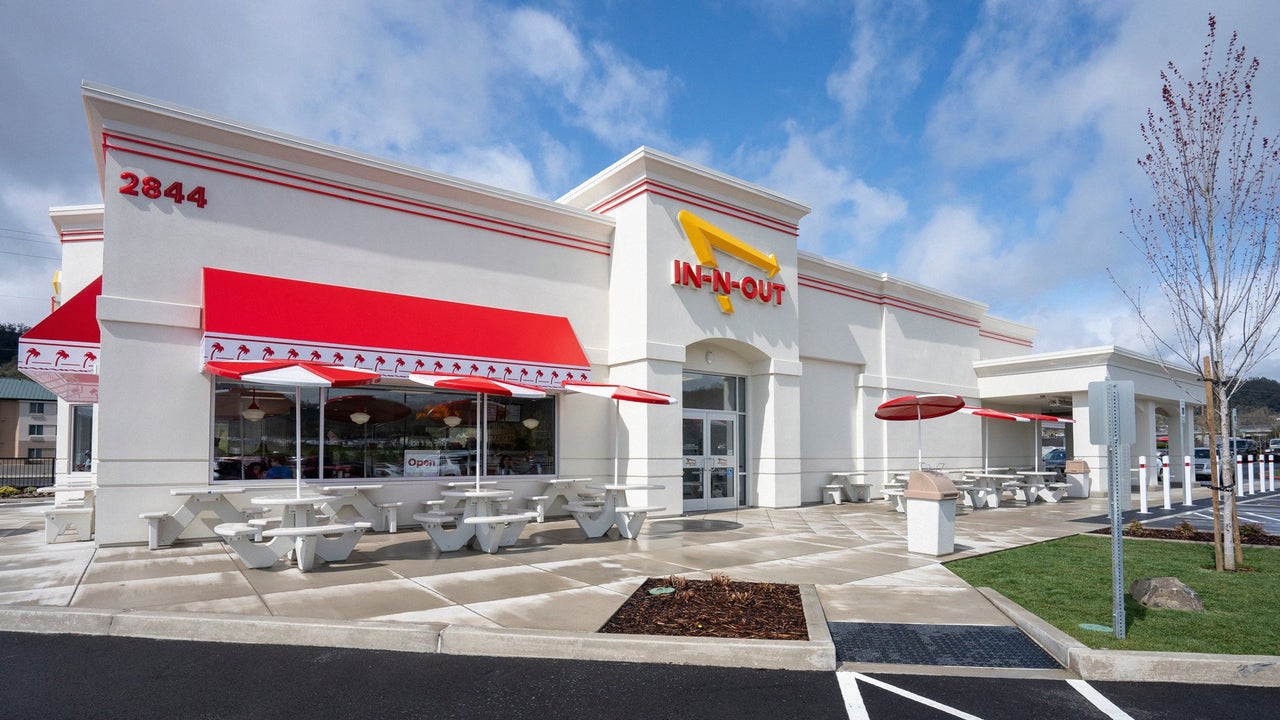
FastCompany: An off-menu item is one of In-N-Out’s biggest selling points. Since its inception, the West Coast burger chain has built its reputation on a stripped-down menu of burgers, fries, and shakes. In 2005, the chain began listing some of its most popular off-menu orders publicly under the “ Not-So-Secret Menu.
” One of the chain’s most iconic items on this menu is the Animal Style burger, which is “a burger of your choice with hand-leafed lettuce, tomato, a mustard cooked beef patty; add pickle, extra spread, with grilled onions.” While chains like Panera and Wendy’s tend to discourage menu modifications, In-N-Out has done the opposite, turning one of its off-menu creations into a defining part of its brand. CNBC reported that In-N-Out Burger generates an estimated $2 billion to $2.5 billion in annual sales across more than 400 locations.
On a per-store basis, that means the average In-N-Out outsells a typical McDonald’s nearly 2 to 1, bringing in roughly $4.5 million in annual sales compared with McDonald’s $2.6 million. In-N-Out told Inc. that this customer-driven creativity has become a central part of the business. “Over the years, many of the variations in preparation for our basic menu items were given names, usually by the customers who frequently ordered their burgers that way,” a spokesperson said.
This openness traces back to one of the company’s core principles: accommodating special orders because it’s “all about making our customers happy.” While that strategy may defy conventional business wisdom, In-N-Out remains profitable. The founding of In-N-Out Harry and Esther Snyder opened the first In-N-Out in a Los Angeles suburb in 1948 as California’s first drive-through hamburger stand. Today, the chain remains privately held and has never franchised. It is now run by the couple’s granddaughter, Lynsi Snyder, and has locations in 10 states.
When asked whether In-N-Out would raise prices in response to inflation and California’s new minimum wage , Snyder told USA Today she had made it a priority to keep any increases as small as possible. “I was sitting in VP meetings going to toe-to-toe, saying, ‘We can’t raise the prices that much. We can’t,’” she said . “Because I feel such an obligation to look out for our customer. When everyone else was taking these jumps, we weren’t.” Notably, the Animal Style upgrade costs no more than a standard burger—a reflection of Snyder’s broader philosophy that growth shouldn’t come at the expense of what made the brand work in the first place.
“It’s not [about] adding new products. Or thinking of the next bacon-wrapped this or that. We’re making the same burger, the same fry,” Snyder told Forbes . “We’re really picky and strategic. We’re not going to compromise.” That same tradition has carried through other off-menu items over the years, including the Flying Dutchman —two patties and two slices of cheese with no bun or condiments—which the company’s history page credits to former CEO Guy Snyder, Lynsi Snyder’s father. While In-N-Out never set out to create a profitable menu item, by consistently saying yes to its customers, that’s exactly what it became.
Article truncated for readability. Read the full piece →
The article discusses a successful strategy from a well-known brand that challenges conventional fast-food practices, providing actionable insights for brand strategists.
Weekly digest
Get the Signal digest
Every Monday morning — the top 3 brand trends, 10 high-signal articles, and one emerging signal to watch.
No spam. Unsubscribe anytime.