Score
The New York Red Bulls’ stunning new $100 million soccer facility brings pros and kids under one roof
The New York Red Bulls' new $100 million training facility exemplifies a forward-thinking brand strategy that integrates professional and youth development under one roof, fostering a community-centric approach to soccer. By investing in a state-of-the-art facility that emphasizes visibility and connectivity, the Red Bulls aim to enhance player development and strengthen their brand identity within the sport, ultimately linking their success at the professional level to the growth of their academy.
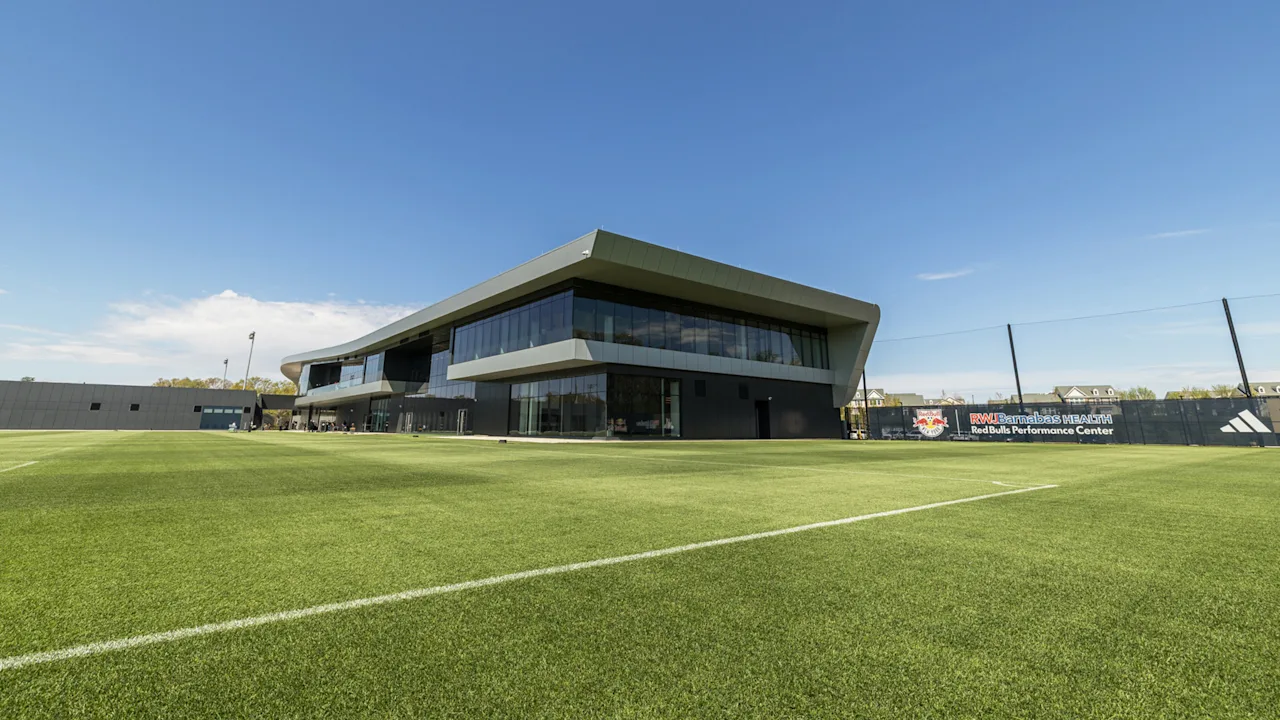
FastCompany: When the New York Red Bulls professional soccer team heads to practice at its new state-of-the-art training facility in Morris Township, New Jersey, the players will be doing so alongside a bunch of 9-year-olds. The $100 million facility , which officially opened in April, was designed as much for the pros on the Major League Soccer squad as for the roughly 6,000 kids that take part in the club’s academy and soccer camp programs every year. “The objective was always to have a space that we could grow into—not just good for the moment, but to think about the future,” says Marc de Grandpré, president and general manager of Red Bull New York.
“Our success on the first team is going to be predicated on our success in the academy, ultimately.” [Photo: Red Bull New York] It’s an unusual investment for an American soccer team. The facility, officially named the RWJBarnabas Health Red Bulls Performance Center , spans across 80 acres and features eight full-size soccer pitches—including a 350-seat match field—as well as gyms, physiotherapy spaces, classrooms, and a team-building dining hall.
The facility is now the main practice area for the Red Bulls and the second-division Red Bull New York II , but it’s also the training ground for the organization’s youth development academy, with teams ranging from under-10s to under-18s. Rather than separate the younger athletes from the pros, the organization decided to bring them all under one roof as a form of encouragement and development for the junior players. “When you’re in an academy meeting room, you’re looking out the window and you can see the first team train,” says Julian de Guzman, Red Bull New York’s head of sport. “That’s where you want to be one day.
And that’s something to be reminded of every day.” [Photo: Red Bull New York] De Guzman says this is the norm in Europe, where the academy arms of professional soccer teams are valuable sources of new talent. Red Bull, which also owns several other professional sports teams, including soccer teams in Leipzig, Germany, and Salzburg, Austria, is now bringing this approach to the U.S. To do so, they’ve worked with the global architecture and design firm Gensler, which has a deep portfolio in sports training facility design.
Previous projects include training facilities for the WNBA’s Las Vegas Aces and the professional basketball teams in Phoenix . Kristin Byrd, the lead designer on the Red Bulls facility, says the team came with high expectations for how the space could function and match the caliber of facilities used by its other teams, particularly its European soccer teams. [Photo: Red Bull New York] One primary demand was that players be as connected to the field as possible.
That translated into a design ethos of extreme transparency throughout the facility, with its 4,600-square-foot gym that looks out of a two-story wall of windows onto the main training pitch, and everything from the dining hall to the hydrotherapy pool offering clear sight lines to the field. “The flow and the adjacencies are different from many training facilities that we’ve done previously,” Byrd says. [Photo: Red Bull New York] Views to the training fields are all about keeping players connected to the game, and to the team.
Article truncated for readability. Read the full piece →
The article discusses a significant investment in a training facility that reflects a strategic brand approach, which is impactful for both professional and youth soccer, making it relevant for brand strategy professionals.