Score
Inorganic Growth: 3D Printed Street Furniture from Urban Rubble
BENTU DESIGN's Inorganic Growth project exemplifies how brands can leverage sustainability and innovation in their strategy by transforming urban demolition waste into functional street furniture. This approach not only addresses environmental concerns but also creates a unique narrative that connects the product to its historical context, enhancing brand identity and consumer engagement.
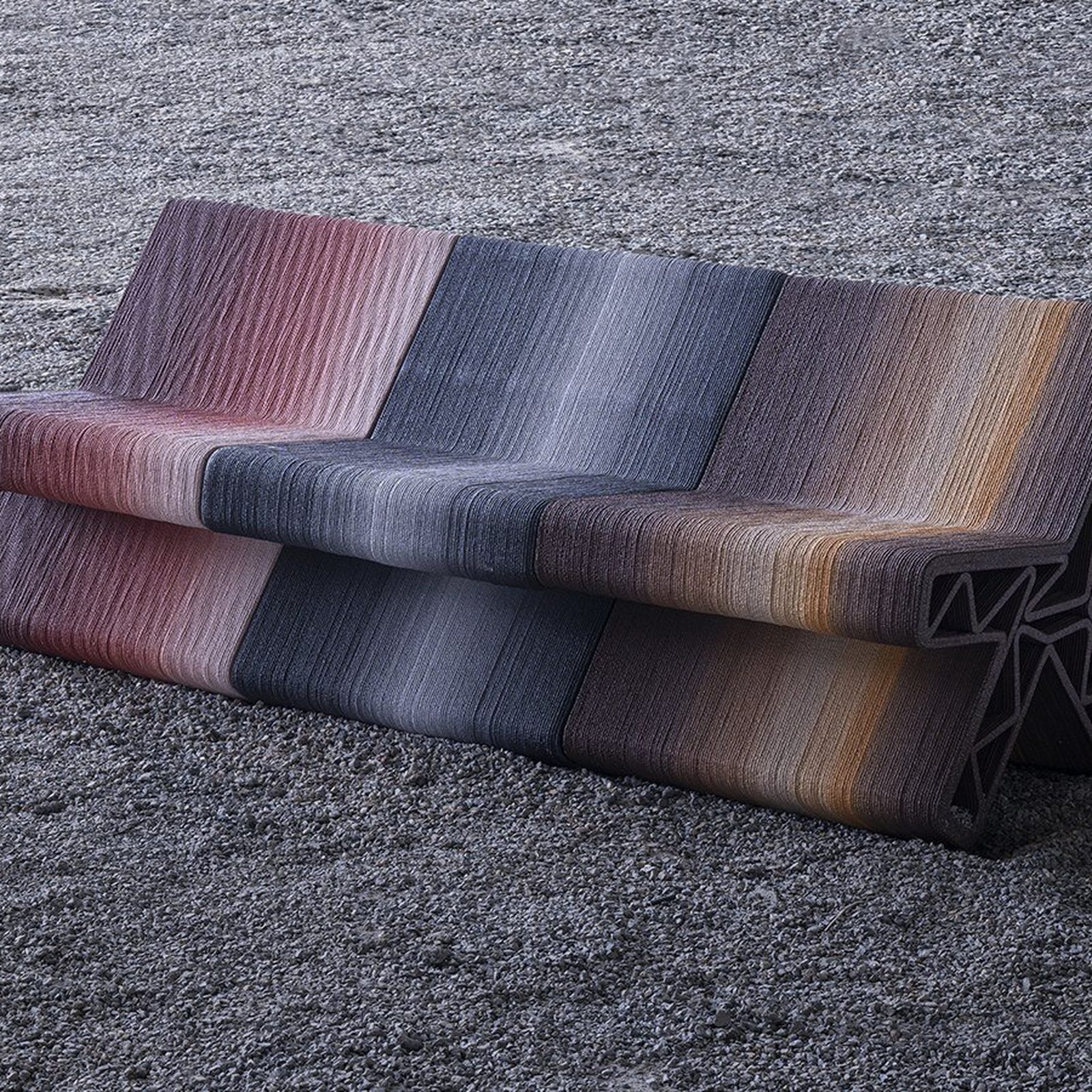
Abduzeedo: Inorganic Growth: 3D Printed Street Furniture from Urban Rubble kai March 28, 2026 BENTU DESIGN's Inorganic Growth converts demolition waste from urban villages into 3D printed street furniture, with algorithmically derived color tones. The Guangzhou-based studio BENTU DESIGN developed this research project to address the enormous volume of construction debris generated by cleared urban villages. The team engineered a printable composite containing up to 85% recycled solid waste.
Crushed concrete, brick fragments, and mortar combine with fly ash, slag powder, and silica fume to form a cementitious material with genuine structural performance. The resulting chair (PU) and stool (YOU) carry the visual memory of their source sites. Each object links material substance to the former environment it came from. Color values are extracted from the demolished neighborhoods. Iron-red brick tones, cement-gray concrete, muted greens, and glazed tile blues all contribute. Dual print heads distribute inorganic pigment along the vertical axis, generating gradual chromatic transitions from base to top.
The stratified surfaces read like geological cross-sections. Each layer references the accumulated time of a vanished place. How 3D Printed Street Furniture Captures Demolished Site History A mobile processing unit stationed at demolition sites handles crushing, sorting, and printing in sequence. This localized approach cuts transportation-related carbon emissions by roughly 70% and achieves a 92% material utilization rate. The 3D printed street furniture production process cuts carbon output by 65 to 80 percent compared to conventional concrete prefabrication. Intelligent slicing algorithms trim material consumption by around 40%.
The project treats matter as a carrier of continuity, embedding traces of former environments into functional public objects.
The article discusses an innovative approach to sustainability in design that has significant implications for brand strategy, particularly in the context of urban development and consumer engagement.
Weekly digest
Get the Signal digest
Every Monday morning — the top 3 brand trends, 10 high-signal articles, and one emerging signal to watch.
No spam. Unsubscribe anytime.