Score
To save $30 million, LAX built its new concourse outside the airport
The construction of the new Midfield Satellite Concourse South at LAX demonstrates an innovative approach to building in complex environments by utilizing offsite construction methods. This strategy not only saved $30 million and reduced construction time but also allowed for greater flexibility and sustainability in design, which can inform future brand strategies in the architecture and construction sectors by emphasizing adaptability and local engagement.
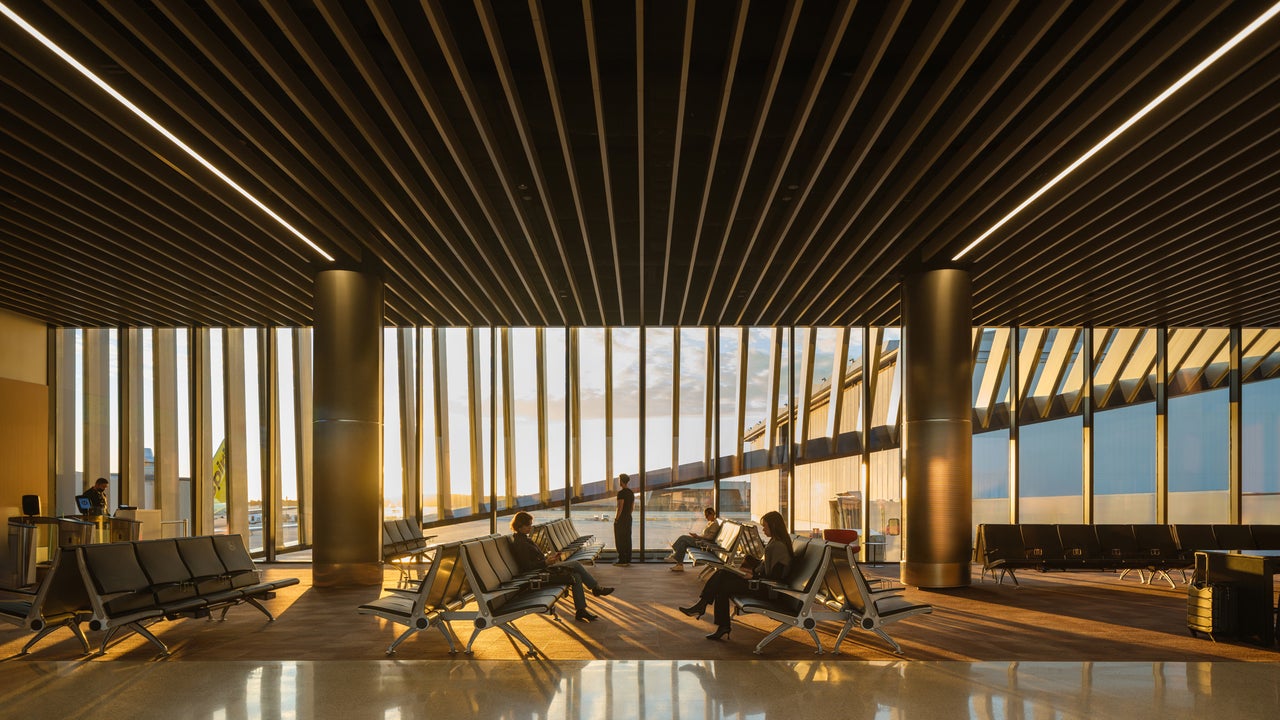
FastCompany: A new concourse on the edge of Los Angeles International Airport’s international terminal may have just cracked the code for building in highly complex airport environments . The Midfield Satellite Concourse South, designed by the architecture firm Woods Bagot , used a construction method that literally works around the complex and secured space of an active airport runway. Rather than being built on site—on the airfield of one of the busiest international airports in the world—the designers and contractors worked with the airport authority, Los Angeles World Airports, to come up with an alternative solution.
They opted for an “offsite construction and relocation” approach, turning the concourse into a modular design that could be built in segments away from its final location. The airport carved out a construction space just outside its northern runway, roughly 1.75 miles from where the concourse would be installed, allowing construction to proceed without having to work around the relentless flight schedule of an international airport.
[Photo: Los Angeles World Airports] “It was always the intent from the beginning that this was going to be a new methodology for delivering this type of project,” says Matt Ducharme, Woods Bagot’s North America design director. “It saved six months and $30 million because we had this process.” [Photo: Jason O’Rear] Crucially, the offsite construction approach meant that the jobsite was technically outside the airport, which lifted many of the contracting and insurance requirements that would have otherwise limited which construction companies could do the job.
Not needing to pass through Transportation Security Administration checkpoints, workers could get onto and off the jobsite quickly. Not needing the high level of insurance required to work on an active airfield, smaller, local builders were able to participate in the construction as well. The project hired more than 30% of its construction workforce from local companies, an unusually high percentage for this kind of construction. A design that embraces the SoCal light The concourse is a 150,000 square foot, eight-gate addition to LAX’s international terminal, which handles more than 1,200 flights weekly .
The design was based around controlling and embracing the Southern California light, using a brise-soleil shading system that blocks the harshest solar exposure from the south while creating floor-to-ceiling views of the mountains to the north, which also reduces the need for interior lighting and air conditioning. [Photo: Jason O’Rear] The LAX concourse design is made up of eight segments, one for each gate, which Ducharme says were designed to be like living rooms, with enough comfort to meet the needs of travelers but also conscious of their material use.
Unlike a building constructed on its final site, the overall weight of each of the eight segments had to be closely monitored and controlled for the 1.75-mile journey they would take. [Photo: Jason O’Rear] “We designed towards what the off-site would allow us to do. And I think it made a better project,” Ducharme says. “It made us more thoughtful of what infrastructure could be, and that everything that went into this thing really needed to earn its place in the segment.” [Photo: Jason O’Rear] The design was affected by another big consideration.
Article truncated for readability. Read the full piece →
The article discusses a significant cost-saving strategy in a major infrastructure project, which is relevant to brand strategy professionals, particularly in architecture and construction, due to its innovative approach and implications for future projects.