Score
It’s not ‘AI,’ and it’s not ‘superintelligence.’ So, what is it?
The article discusses President Donald Trump's rebranding of 'artificial intelligence' (AI) to 'superintelligence' (SI) following his address at the United Nations. This change has sparked debate among experts and the public regarding the appropriateness of the term 'AI' and whether it accurately reflects the capabilities of current technologies. Brand strategists can learn from this situation about the impact of terminology and branding on public perception, especially in rapidly evolving fields like technology.
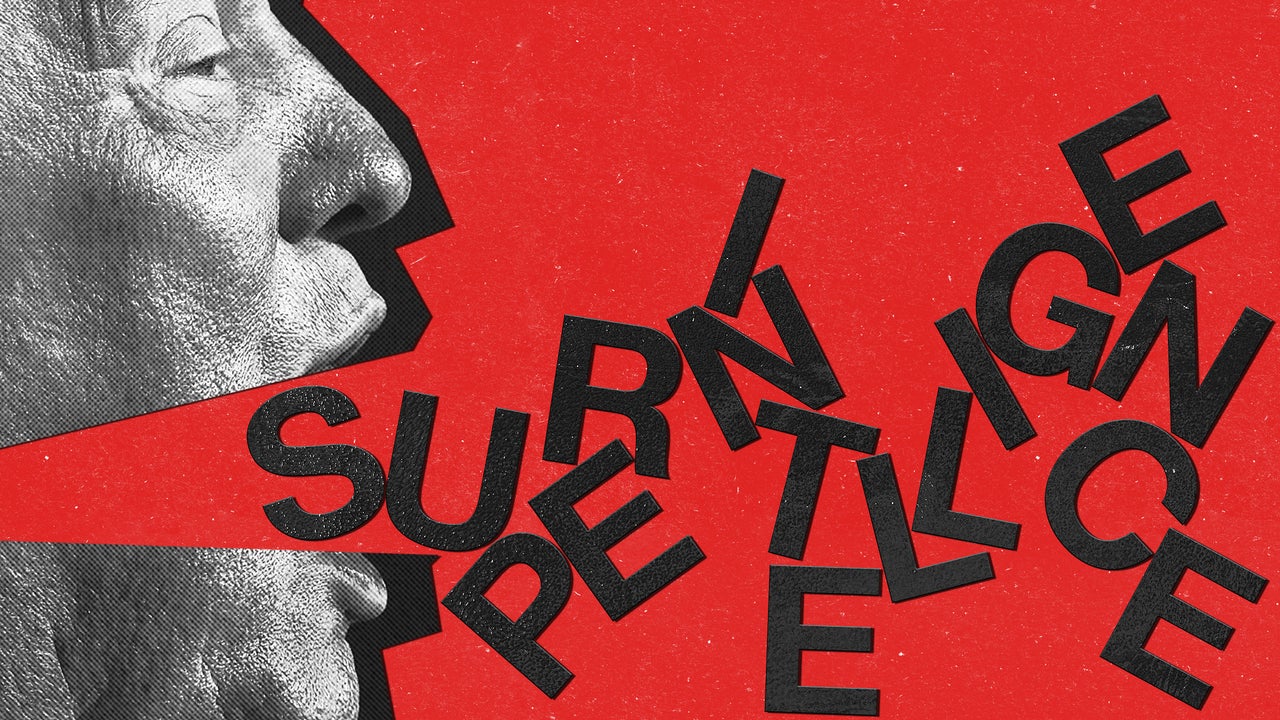
FastCompany: When President Donald Trump addressed the United Nations in late September, he said the word “artificial” in “artificial intelligence” made the technology sound fake . Instead, he said, his government would start calling it “superintelligence,” or “SI.” Not long after those remarks, the president made it official. He signed an executive order that instructed federal agencies to use his chosen phrase instead of “ AI ” in official communications.
What Trump says goes: The Department of Justice has since told its staff to follow suit, and other government departments are likely to follow—not least because the president has now branded anyone calling it AI “THE ENEMY.” And it’s not just the government—the tech sector has responded to Trump’s pronouncement, too. Elon Musk said on October 4 that SpaceXAI would become SpaceXSI . The rebrand isn’t just Trump being Trump: AI’s capabilities have improved far beyond their previous limits since ChatGPT was first released in November 2022, and are reaching the point of superintelligence—a term that already means something in AI circles.
(Superintelligence, in that telling, is the point at which AI systems can systematically outperform humans.) However, sticking the “superintelligence” label on a technology—when parts of it definitely don’t meet that standard yet—could make things worse by giving people a false sense of confidence and confusing them further. OpenAI CEO Sam Altman said he thought “superintelligence” was “a more accurate term” than the current branding of AI, though he doesn’t think people will find it “less scary.” An exclusive survey for Fast Company by market research firm Early Studies validates Altman’s perspective.
A poll of approximately 1,000 people in the United States—which the firm says is a statistically representative sample of the population based on its methodology—found that only 1 in 9 people think the rebrand will have a positive effect on the U.S. Furthermore, 53% of Americans think people they know would not be comfortable calling the tech “superintelligence.” Trump kinda has a point However, Trump’s unilateral action does raise a valid question about the term we currently use, and whether it’s suitable in the first place. AI has always been a bad way to describe a broad range of technologies.
It dates back to a 1955 proposal by math professor John McCarthy and other academics for a Dartmouth College summer workshop held the following year. During the event, disparate researchers working to replicate the brain in silico (in or on a computer) agreed on “artificial intelligence” as a broad term to cover the full scope of their efforts. Seven decades later, it fits better than it did in the 1950s—but is still a highly disputed term. Tony Thorne, a lexicologist at King’s College London, says AI’s vagueness has helped the industry thrive—and the technology survive.
“The term’s weaknesses—vague and imprecise, ambiguous since the first part looks negative and the second impressive or reassuring—are also its strengths,” he notes. The term’s use over the intervening decades has helped it stick in the minds of companies, governments, researchers, the media, and the public. A YouGov poll found 53% of Americans preferred “AI” as a way to describe the technology we’re currently using, compared with fewer than 10% who preferred Trump’s favored nomenclature. One reason might be who’s asking for the rebrand.
Article truncated for readability. Read the full piece →
The article highlights a significant rebranding effort by a political figure that has implications for public perception of technology, making it relevant for brand strategists, though the discussion around AI terminology is not entirely new.
Weekly digest
Get the Signal digest
Every Monday morning — the top 3 brand trends, 10 high-signal articles, and one emerging signal to watch.
No spam. Unsubscribe anytime.