Score
Cutwater is becoming a $1 billion brand by doing the opposite of what everyone else in alcohol is doing
Cutwater is rapidly approaching $1 billion in annual sales by positioning itself as a bold alternative in the spirits market, focusing on high-alcohol, ready-to-drink cocktails at a time when many brands are shifting towards non-alcoholic options. This strategy of embracing potency and humor has resonated with consumers, making Cutwater one of the fastest-growing brands in the industry and a significant contributor to Anheuser-Busch InBev's revenue growth.
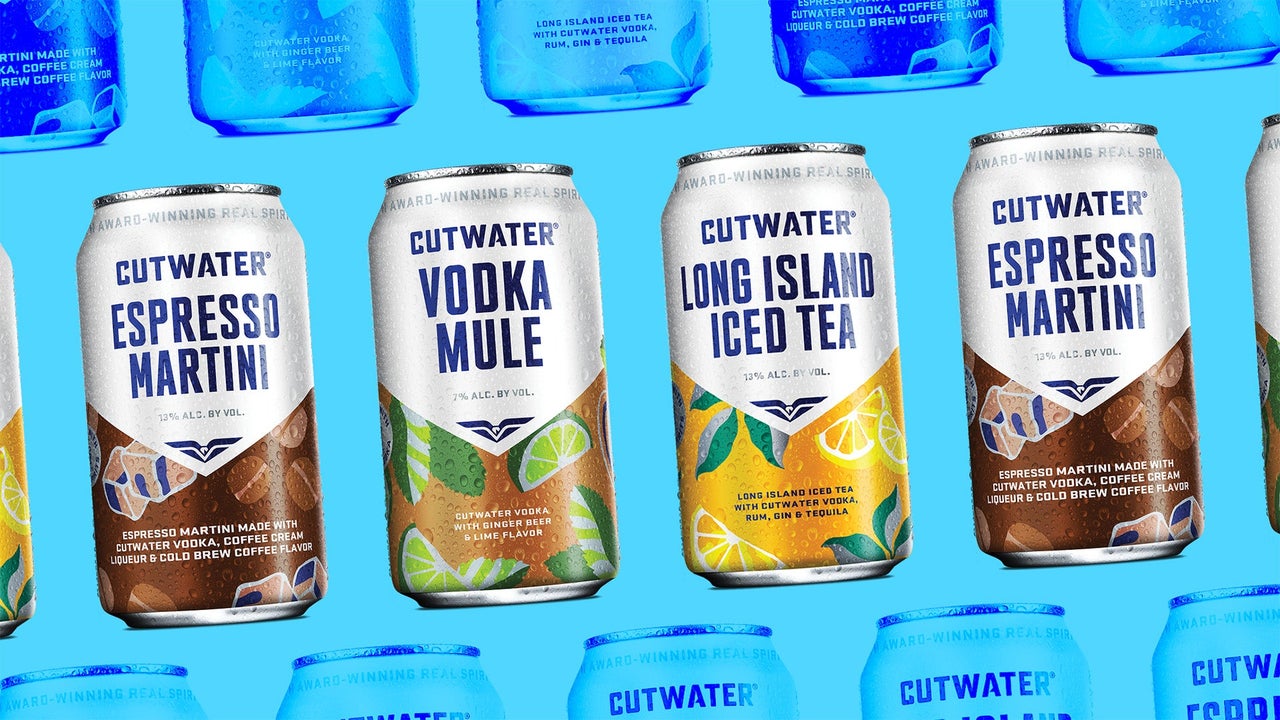
FastCompany: Cutwater, one of the fastest-growing brands in the spirits industry , is approaching a major milestone: $1 billion in annual sales. Revenue growth for the ready-to-drink canned cocktails , which come in two dozen different vodka, tequila, whiskey , gin, and rum concoctions, has hit triple digits—fast enough to make the brand one of the biggest growth engines for parent company Anheuser-Busch InBev . Cutwater has been scaling so quickly that in the second quarter of this year, the brand became the second-largest contributor to overall revenue growth for AB InBev, the largest brewer in the world.
To take advantage of that swelling demand, the $150 billion beverage giant has continued to roll out new flavors, and consumers have been drinking them up, despite alcohol consumption and sales at record lows in the United States. “We were the fastest growing company in spirits because of the performance of Cutwater,” said Michel Doukeris, the CEO of AB InBev on the company’s second quarter earnings call on Thursday. Speaking to investors and analysts, Doukeris said Cutwater had become the “number one share gaining brand” in the entire spirits industry.
“This brand was inexistent six, seven years ago and is moving towards becoming a $1 billion brand and is the fastest growing brand in the spirits industry in the U.S., now a top six or seven, overall in size brand in the spirits industry.” It’s a remarkably rapid ascent for a brand that started as a side hobby for Yuseff Cherney, the co-founder and head brewer at Ballast Point Brewing in San Diego. In 2007, Cherney started using an old beer fermenter to distill vodka, gin, rum, and whiskey. That project became Ballast Point Spirits, which spun off from Ballast Point when the beer brand was sold to Constellation for $1 billion in 2015.
The next year, those canned cocktails got a rebrand, and Cutwater Spirits launched. By 2019, AB InBev acquired the ready-to-drink brand for an undisclosed sum . In an era dominated by a growing number of non-alcoholic beers and mocktail options, Cutwater has won over consumers by veering in the opposite direction and selling drinks that pack a punk. Stamped on every can is a guarantee, made with 2+ shots of real spirits. Each 12-ounce can contains between 7 and 13 percent alcohol, and the vast majority of flavors sit north of 10 percent.
One of the most popular flavors, the Long Island Ice Tea, contains more than three times as much alcohol found in a Bud Light or a Surfside . Cutwater’s formulas are so potent that the brand’s overt booziness has become something of a running joke across social media.
Last October, GQ dubbed Cutwater “the chaotic king of canned cocktails.” Earlier this summer, the Atlantic warned the cans “will smash you to the ground.” As one creator, Loryn Powell, put it , “Apparently Cutwaters are getting everyone wasted.” The comedian went viral on TikTok , racking up more than 8 million views for giving herself a breathalyzer test after drinking two cans in an hour. One lime margarita put Powell at 0.066, a blood alcohol concentration right below the legal driving limit of 0.08. The second elevated her BAC above 0.09.
Article truncated for readability. Read the full piece →
Cutwater's unique positioning and rapid growth in a saturated market provide significant insights for brand strategy professionals, showcasing a successful counterintuitive approach in the alcohol industry.