Score
Herman Miller is rebuilding the Aeron chair from the inside out
Herman Miller's redesign of the Aeron chair emphasizes sustainability and adaptability, reflecting a shift in brand strategy towards eco-consciousness and modern workplace needs. By utilizing lighter, recycled materials and introducing new colors, the brand aims to maintain the chair's relevance in a changing market while reinforcing its status as a symbol of innovation and comfort in office design.
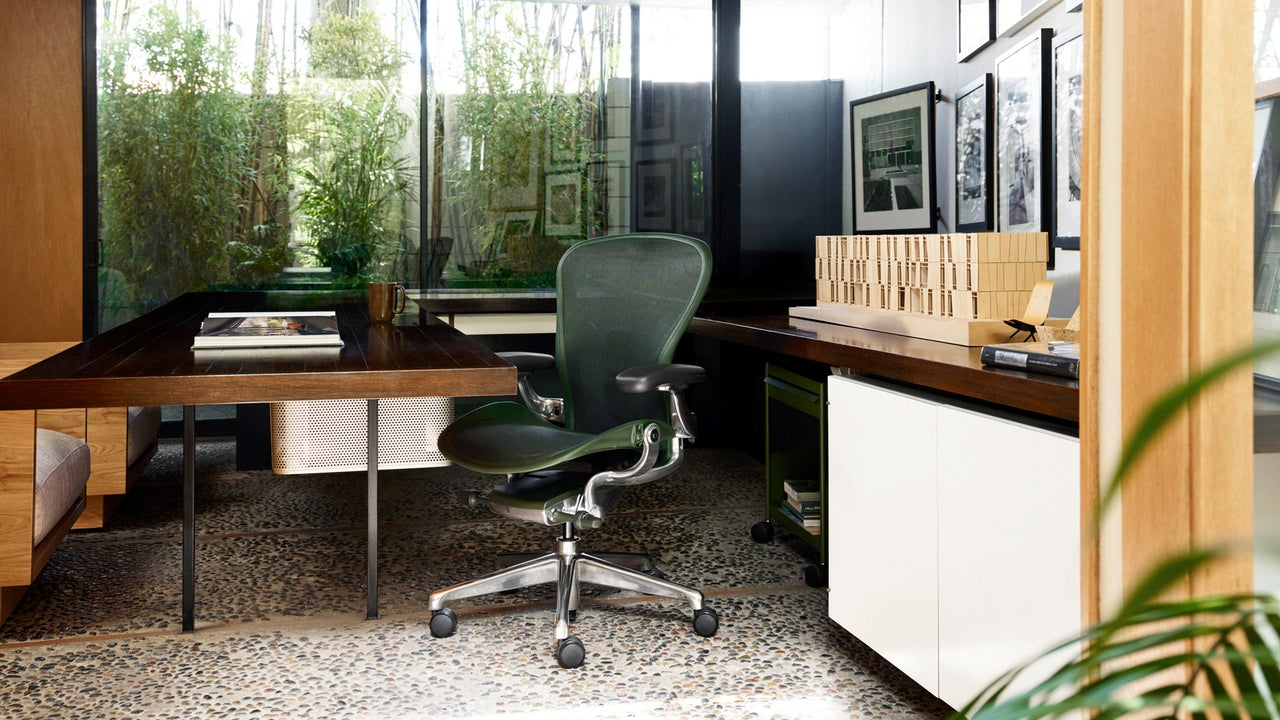
FastCompany: When Herman Miller launched the Aeron chair in 1994, almost nothing about it made sense. Unlike other chairs of that era, it wasn’t made of leather or full of plush foam. Instead, its frame was exposed, its mesh was transparent, and it cost double what buyers expected to pay for an office chair. “Most ergonomic chairs have misunderstood the human form,” says Don Chadwick, who co-designed the chair with the late Bill Stumpf. Bill Stumpf and Don Chadwick in the early 1990s [Photo: courtesy Herman Miller Archives] Some industry observers had doubts about whether the Aeron would succeed. Those skeptics were wrong.
More than nine million Aerons have sold since launch. The Aeron quietly became a powerful status symbol over the next two decades. MoMA added the chair to its permanent design collection. And it became the default chair to find desk side at hedge funds, ad agencies, and Silicon Valley startups that were transforming the future of work, thanks to the computer. “Technology had taken over the office environment,” says Chadwick.
“Office chairs needed to reflect the needs of comfort and adjustability consistent with the office revolution.” [Photo: Pippa Drummond/courtesy of Herman Miller] The Aeron, by any reasonable measure, does not need improving. But Herman Miller has updated it anyway. This month, the company is rolling out a version of the Aeron that takes the chair apart at the molecular level and rebuilds it around a more sustainable supply chain. Together, these changes are projected to reduce the Aeron’s global average embodied carbon by 12%, on top of years of previous reductions.
“The sustainability investments we’ve made in this particular product is like compounding interest,” says Gabe Wing, vice president of sustainability at MillerKnoll, Herman Miller’s parent company. “It keeps adding up over time.” [Photo: Pippa Drummond/courtesy of Herman Miller] Rebuilt at the molecular level At Herman Miller, Wing’s team had an important insight: The weight of a product has a direct impact on its carbon footprint. So the team mapped where the Aeron carried the most weight and tried to improve these components with lighter, more sustainable materials.
The seat and back frames are now made from a combination of recycled nylon and bio-based “biomass balance” nylon. The aluminum base has been reengineered to shave 1.85 pounds off its weight without sacrificing stability. The chair is also now built with plastic that would otherwise have ended up in oceans or landfills—a program first introduced on the Aeron in 2021. [Photo: courtesy of Herman Miller] As of June 2026, Herman Miller has diverted more than 660 metric tons of plastic through that initiative, the equivalent of about 79 million water bottles.
When Herman Miller first measured the Aeron’s carbon footprint, the chair came in above 100 kilograms of embodied carbon. Today, it sits in the low 60s. Making these changes was complicated. Substituting recycled or bio-based nylon for virgin nylon isn’t a drop-in swap. Recycled materials behave differently in manufacturing—they absorb color differently and they often show more lot-to-lot variation than virgin material. Some suppliers couldn’t actually produce at the volume Herman Miller needed. The environmental data backing many of these new materials has had to be validated in real time.
Article truncated for readability. Read the full piece →
The redesign of a classic product like the Aeron chair by a leading brand like Herman Miller highlights significant trends in sustainability and adaptability, making it highly relevant and impactful for brand strategy professionals.