Score
Scientists just designed the world’s most accurate clock
Physicists in Singapore have developed an atomic clock that measures time with unprecedented accuracy, down to the 19th decimal place, surpassing previous records held by U.S. and Chinese laboratories. This breakthrough in precision could revolutionize various fields, including GPS navigation and geological monitoring, and may redefine the global standard for measuring time. Brand strategists can take note of how advancements in technology can create new opportunities for brands to innovate and enhance their offerings in precision-driven industries.
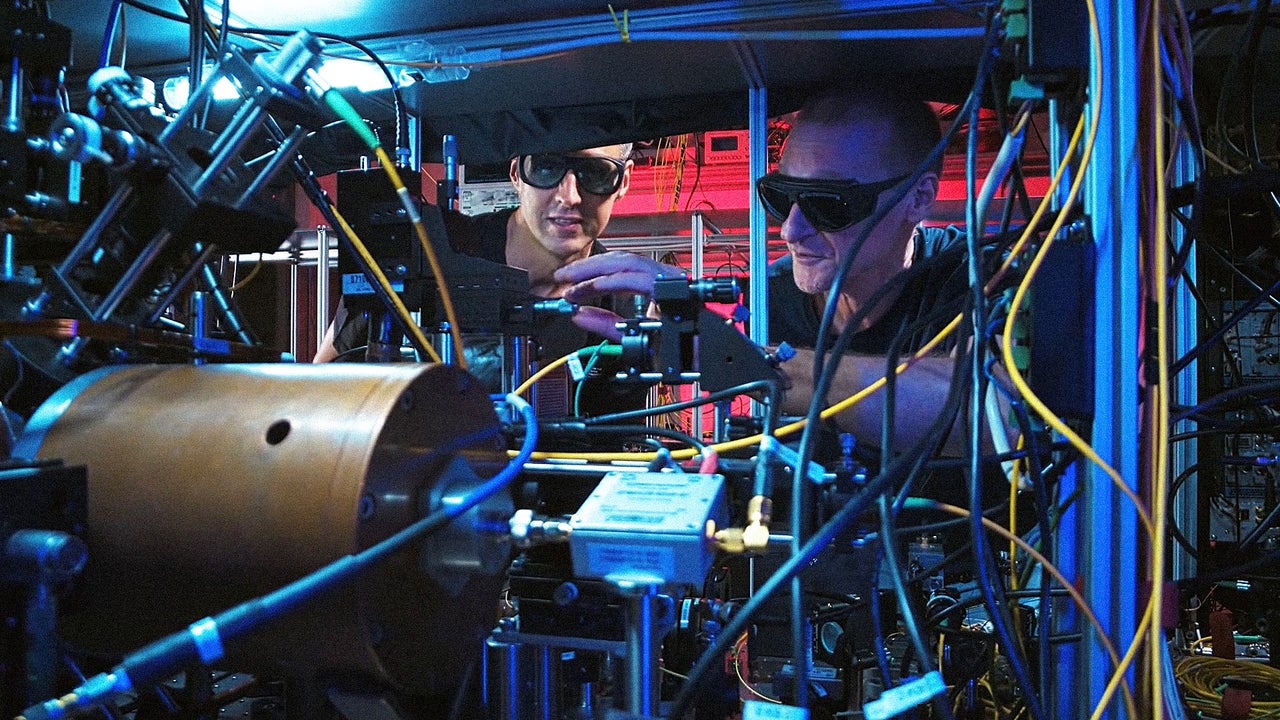
FastCompany: Physicists in Singapore have built an atomic clock so precise that it measures time down to the 19th decimal place. A machine with this level of accuracy could run for hundreds of billions of years—far longer than the entire age of the universe—without gaining or losing a single second. This leaves the world’s reigning timekeeping superpowers in the dust. Until now, the ultimate records belonged to elite laboratories in the U.S.
and China, which spent years locked in an intense scientific duel using clocks powered by aluminum and deep-frozen calcium (both using ions, which are individual atoms stripped of an electron to give them an electric charge). But Singapore’s new clock shatters anything else out there by delivering a fourfold leap in accuracy over the best American and Chinese machines, establishing a whole new league of precision, according to the research paper published in Nature . [Image: Centre for Quantum Technologies] An element with an armor Atomic clocks quietly run modern civilization.
Without their ultra-precise timing, GPS navigation would fail, cellular networks like 5G would desynchronize, and real-time financial markets would descend into chaos. Today, the world’s official time is still governed by cesium atomic clocks, a global standard established in the 1960s. At their core, these machines work just like a grandfather clock, but instead of counting the mechanical swings of a brass pendulum, they count the natural vibrations of light waves. An atom is surrounded by orbiting electrons that inhabit distinct energy levels.
When exposed to electromagnetic radiation vibrating at an exact frequency, those electrons absorb the energy and jump between levels. In a standard cesium clock, a microwave beam is tuned until it hits the precise frequency that makes the electrons jump—several billion oscillations every second. The clock’s electronics simply count those waves: When exactly 9,192,631,770 cycles tick by, one official second has passed. In the early 2000s, physicists realized they could build a much sharper metronome. Instead of using microwaves, they developed optical atomic clocks that bathe atoms in visible laser light.
Because laser light waves vibrate hundreds of trillions of times every second—thousands of times faster than microwaves—they divide each second into trillions of tiny slices, tracking the flow of time with vastly finer resolution. Not all atomic clocks are created equal, however. Even though an atom’s internal jump is fixed by the fundamental laws of physics, the atom itself can be nudged off beat by temperature changes, stray electric charges, or magnetic fields. That sensitivity sparked an intense race among global superpowers to create the most stable atomic clocks using different elements.
[Image: Centre for Quantum Technologies] Now an unprecedented level of precision has arrived with a new clock sitting inside a laboratory of Singapore’s Centre for Quantum Technologies . There you will find a massive, vibration-damped steel table crowded with lenses, beam splitters, and mirrors. At its core are two sealed, stainless-steel vacuum chambers resembling miniature deep-sea submersibles, each ringed with circular glass portholes.
Article truncated for readability. Read the full piece →
The development of the world's most accurate clock is a significant technological advancement that could influence various industries, though its direct implications for brand strategy are somewhat indirect.
Weekly digest
Get the Signal digest
Every Monday morning — the top 3 brand trends, 10 high-signal articles, and one emerging signal to watch.
No spam. Unsubscribe anytime.