Score
Meet The Design Studio Thats Paid In Wine Meals And Travel Rather Than Money
The article highlights how the Lithuanian design studio andstudio has innovatively redefined client engagement through its Wine Design Exchange initiative, where they are compensated with experiences rather than traditional fees. This approach not only fosters deeper relationships with clients but also allows for immersive brand development, emphasizing the importance of storytelling and positioning in branding strategy.
Creative Boom: Insight Graphic Design Meet the design studio that's paid in wine, meals and travel rather than money andstudio's Wine Design Exchange eschews fees, RFPs and email chains in favour of a week spent living alongside winemakers. Here's what other studios can learn from it. Written By: Tom May 5 August 2026 Every studio owner knows the drill. Draft the deck, chase the brief, wait for the procurement team to get back to you. It's slow, it's expensive to pitch for, and, more often than not, the client you actually want never sees your name.
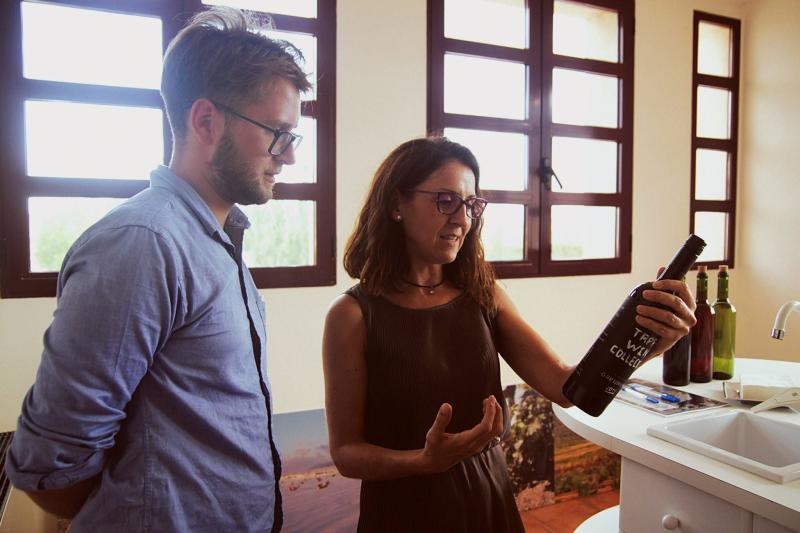
Lithuanian studio andstudio has decided to skip that whole process entirely, at least for one corner of its business. Its new initiative, Wine Design Exchange, asks nothing more of clients than a plane ticket, a spare bed and a few decent dinners; the studio's fee, essentially, is the trip, the table and the wine that comes with it. The premise is simple. Once a year, andstudio will pick a winery anywhere in the world, move in for a week, work the harvest, sit through the tastings and get to know the people behind the label. From that immersion comes a full rebrand: strategy, positioning, identity, packaging, the lot.
There's no agency fee; the winery covers travel, accommodation and meals, and that's it. It sounds almost naive in an industry built on retainers and scope creep, but there's a sharper commercial logic underneath it. Family-owned wineries are struggling: younger drinkers are consuming less, the market's fragmenting and, according to andstudio's own research, 85% of consumers choose a bottle based on the label alone. If that statistic is even roughly true, most independent wineries are losing the argument before anyone's tasted a drop.
andstudio has spotted a genuine business problem and built a business development model to solve it at the same time. Free work isn't really free The obvious question is why a studio that's just topped the 2025 ADCE Design Firm rankings would give away its most valuable service for little more than a flight, a bed and a full table. The answer, according to partner and creative director Augustinas Paukštė, is trust. "We know the chances of an Italian winery discovering a branding studio from Lithuania are pretty small," he says.
"We wanted to remove that barrier completely and create an offer that feels irresistible." That's a polite way of describing what's, in fact, a very deliberate piece of marketing. andstudio isn't giving anything away; it's investing in access. A week embedded with a winemaker generates a case study no cold pitch could match, a relationship that's stickier than a standard client contract and a story that mainstream press will actually cover, this article being a case in point. The wineries get a rebrand; andstudio gets raw material for its own reputation, plus, presumably, some very good meals and bottles to take home.
Neither side is being naive here, and there's a lesson in that for any studio wondering how to get in front of clients who'd otherwise never return an email. How they got the idea The idea traces back to a pre-pandemic studio exchange in Florence, when andstudio's team spent a month working alongside an Italian design studio and spent many evenings in wine bars, long dinners, and on terraces. "That was the first time we experienced wine through the people who make and drink it every day," Augustinas recalls. "The conversations felt incredibly familiar.
Article truncated for readability. Read the full piece →
The article presents a unique compensation model that could influence client-agency relationships in the design industry, making it significant and relevant for brand strategy professionals.