Score
When it comes to road safety, quick-build strategies may be better than ‘perfect’ solutions
The article emphasizes the importance of quick-build strategies in urban road safety, advocating for immediate implementation of road diets to enhance safety and accessibility rather than waiting for perfect, costly solutions. This approach allows cities to establish a safer network rapidly, benefiting all road users and demonstrating the effectiveness of these changes over time.
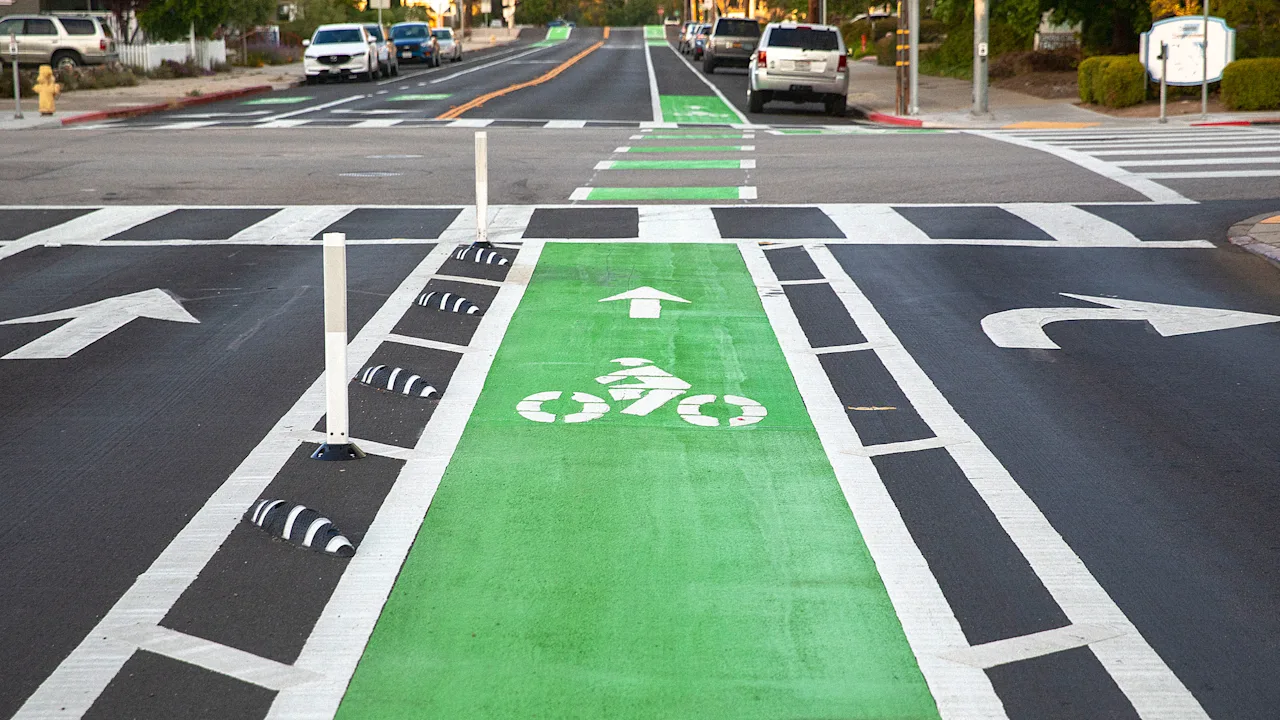
FastCompany: Many local government leaders across the country know the types of street designs that reduce the number of severe crashes, but they keep delaying the changes because they’re waiting for money. Waiting for a big federal grant. Waiting for a full reconstruction project. Waiting for the perfect, permanent solution. But while Americans wait, people keep getting hurt. There’s a better way, and it doesn’t require tearing up a single road. Road diets repurpose space that already exists.
By narrowing or reducing car lanes on overly wide streets, cities can carve out protected bike lanes, pedestrian refuges, and calmer traffic conditions—without major reconstruction. But here’s the real choice cities face: Act now with quick-build methods to establish a safe network across dozens or even hundreds of blocks, or wait decades for funding to deliver premium concrete infrastructure on just a handful of blocks.
{"blockType":"mv-promo-block","data":{"imageDesktopUrl":"https:\/\/images.fastcompany.com\/image\/upload\/f_webp,q_auto,c_fit\/wp-cms-2\/2025\/12\/speakeasy-desktop.png","imageMobileUrl":"https:\/\/images.fastcompany.com\/image\/upload\/f_webp,q_auto,c_fit\/wp-cms-2\/2025\/12\/speakeasy-mobile.png","eyebrow":"","headline":"\u003Cstrong\u003ESubscribe to Urbanism Speakeasy\u003C\/strong\u003E","dek":"Join Andy Boenau as he explores ideas that the infrastructure status quo would rather keep quiet.
To learn more, visit \u003Ca href=\u0022http:\/\/urbanismspeakeasy.com\/\u0022\u003Eurbanismspeakeasy.com.\u003C\/a\u003E","subhed":"","description":"","ctaText":"SIGN UP","ctaUrl":"http:\/\/urbanismspeakeasy.com\/","theme":{"bg":"#f5f5f5","text":"#000000","eyebrow":"#9aa2aa","subhed":"#ffffff","buttonBg":"#000000","buttonHoverBg":"#3b3f46","buttonText":"#ffffff"},"imageDesktopId":91453933,"imageMobileId":91453932,"shareable":false,"slug":"","wpCssClasses":""}} This isn’t an argument against quality. Bike lanes protected by concrete or landscaped islands are excellent.
But a gold-standard lane on one street does nothing for the person trying to bike safely 10 blocks away. Coverage matters, and quick-build methods make coverage possible right now, within a single generation. Capture the territory first, and harden it over time. What road diets do A road diet reorganizes street space by narrowing and/or reducing regular car lanes to add protected bike lanes without major reconstruction. Road diets deliver measurable improvements beyond bike lanes. Federal Highway Administration and U.S.
Department of Transportation data and studies show they benefit drivers, pedestrians, and the overall street environment: Overall safety benefits. Road diets reduce total crashes by 19% to 47% on average when converting a four-lane undivided road to a three-lane configuration with a center turn lane. This includes reductions in rear-end, left-turn, and sideswipe crashes due to fewer conflict points and better separation of turning traffic. An analysis of 45 road diet sites in California, Iowa, and Washington found a 29% reduction in total crashes. Driving benefits.
Article truncated for readability. Read the full piece →
The article presents a significant shift in urban planning strategies that can influence brand strategies related to safety and accessibility, making it relevant and somewhat novel for professionals in the brand/design industry.