Score
Welcome to the age of the underdog AI model
Krea's launch of its generative AI model, K2, signifies a pivotal shift in the AI landscape, showcasing how smaller startups can disrupt the market traditionally dominated by giants like OpenAI and Anthropic. This move emphasizes the importance of agility and creativity in brand strategy, as Krea positions itself as a unique player focused on artistic expression and user-centric design, potentially appealing to niche markets that value personalized and innovative outputs.
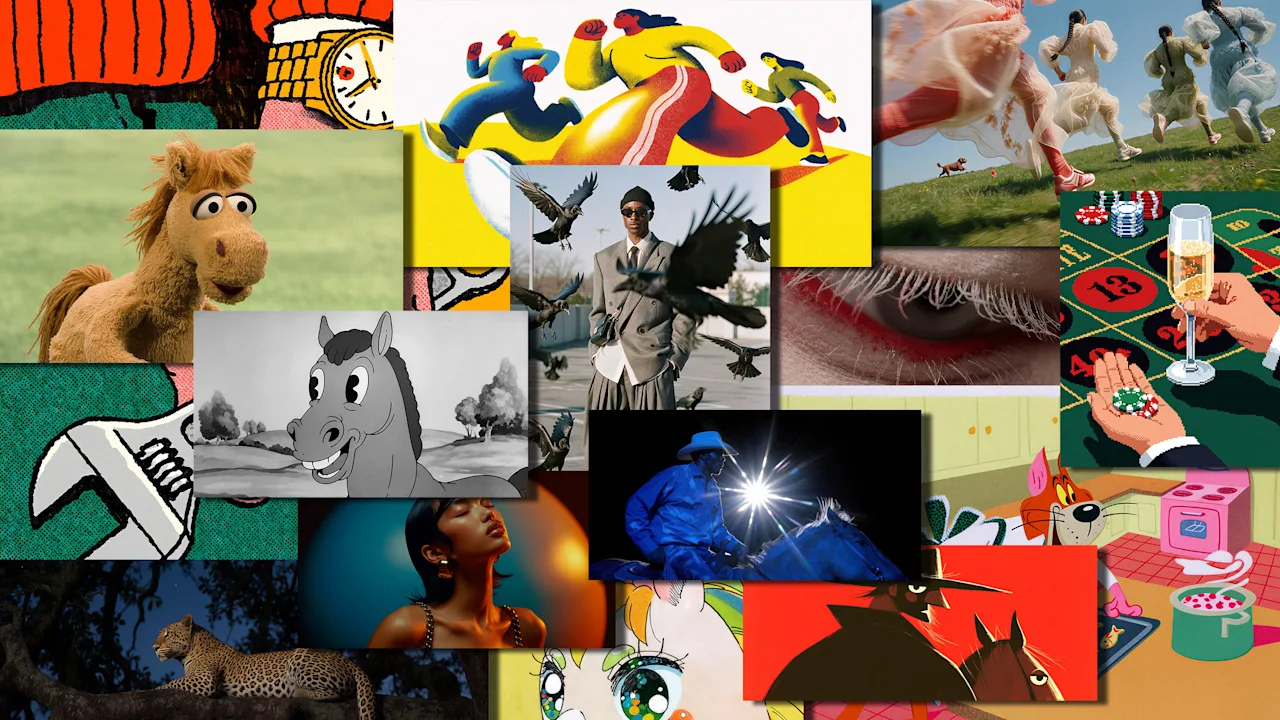
FastCompany: Custom AI models are not just for the AI giants anymore. Because the 37-person startup Krea is releasing its first generative AI model as the design tools startup repositions itself as a full-fledged AI research lab. The model called Krea 2 (or K2 ), is a significant move for Krea, but it also seems to tease an almost inevitable moment in the rapidly evolving AI market, where smaller players in the industry can make more disruptive bets. On one hand, Krea can hardly call itself a bootstrapped startup anymore. It’s now raised $83 million through its Series B at a $500 million valuation.
On the other, it’s tiny compared to the leading frontier model companies, which constantly raise more money to ensure they have an unlimited war chest to train the next best model: OpenAI and Anthropic, which have raised $180 billion and $72 billion , respectively. But to Krea’s co-founder, Diego Rodriguez, it’s invigorating to be small, nimble, and, by one significant measure, no less successful than any frontier model company as a core business. “Until there’s a winner—until OpenAI or someone is profitable—the Olympic Games are on,” he says with a mischievous smile.
The evolution of Krea Krea launched in 2023 to be something like the Adobe of the AI age, a creative platform designed from scratch to allow you to not just generate media with AI, but to tune those outputs, with controls that feel more like a synthesizer than a drafting table. They were the first to offer real-time AI editing tools and the first to put APIs from other AI models into their own app (a practice that has now become standard). And they were quickly profitable. But over time, the team has recognized a distinct ceiling to their work: Krea can only be as open-ended as the models it sits upon.
Image models of today are amazing at specific prompts that often go viral, but they can also feel like they are built on rails. Creative phrasings can still lead you down the same old paths, as models fail to reproduce what’s in your mind’s eye. “The models are trained not to fail and to always give you a good image,” says Krea’s co-founder, Victor Perez.
“And I feel like that takes away a lot of the creative uses—breaking the barriers and letting people go off-road, letting [you] make ‘bad’ images, stuff that looks more artistic that a creative might appreciate more.” [Images: Krea] Indeed, image models are amazing when it comes to what these companies have been prioritizing: photorealism . But any designer reading this knows that when it comes to graphic design and illustration, you can hit the boundaries faster than you’d think. In a demo, Krea pulls up comparisons of the prompt “a cat riding a bicycle” between itself and Google’s Nano Banana.
In Krea’s case, the first outputs are funky and varied, with some exhibiting a hand-drawn feel. In Google’s, no matter how you adjust the prompt, you get a similar coloring-book-looking image presented in the same way. It’s the difference between eating at McDonald’s or a Michelin burger joint. One will always aim to please, while the other may polarize. “I think that the kind of stuff that we are interested in is more niche,” says Perez. “It’s a much smaller market, but we’re fine with it.” [Images: Krea] Spending 15 minutes prompting Krea’s new image model K2 on my own, and I’m impressed by its breadth.
Article truncated for readability. Read the full piece →
The launch of Krea's K2 model represents a significant shift in the AI landscape, highlighting the potential for startups to disrupt established players, which is highly relevant to brand strategy professionals looking for innovative approaches.
Weekly digest
Get the Signal digest
Every Monday morning — the top 3 brand trends, 10 high-signal articles, and one emerging signal to watch.
No spam. Unsubscribe anytime.