Score
The Trump administration just cut down a century’s worth of history at a D.C. golf course
The article discusses the removal of over 500 trees at East Potomac Park, a golf course in Washington, D.C., managed by the Trump administration. This action, which has been criticized as a sudden and unauthorized demolition of historical landscape, has raised concerns among preservationists and led to legal challenges. Brand strategists can take note of how the management of public spaces and historical sites can impact brand reputation and stakeholder relationships.
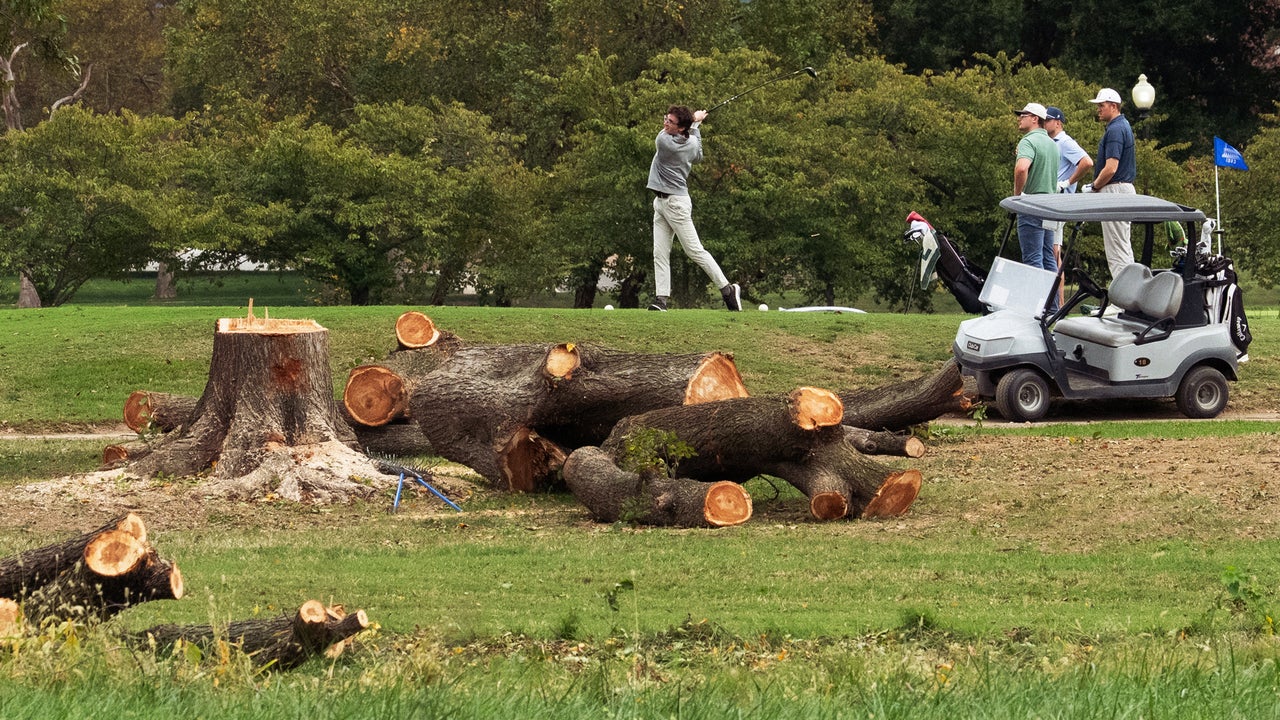
FastCompany: Workers removed more than 500 trees over the weekend at a Washington, D.C., golf course that President Donald Trump is working to remodel . It happened like many of his other design projects around town: suddenly and without permission. Preservationists asked a judge Sunday to halt the Trump administration after it removed 529 trees Saturday at East Potomac Park, a golf course managed by the National Park Service, and on Monday, a judge called the removal “ inexcusable .” The course is home to elms, oaks, pines, and willows, as well as some of the 3,000 Japanese flowering cherry trees gifted by the government of Japan in 1912.
Together they told the story of golf’s rise in America from a mostly treeless game on the U.S. coasts to a sport known for its big, lush vegetation. Now, just like that, a century’s worth of landscape design history has been torn up. [Photo: Aaron Schwartz/Getty Images] The removal happened “faster than anticipated,” according to the lawsuit, and the Trump administration didn’t meet its obligations under the National Environmental Policy Act, attorneys representing the D.C. Preservation League and a pair of local golfers said in a filing seeking an emergency action to pause further tree removal.
“‘Pulling a fast one’ has become the model this administration uses to circumvent the laws intended to protect the environment and D.C. landmarks,” Abbe D. Lowell, a founding member of Lowell & Associates, which is representing the plaintiffs along with Democracy Forward and Democracy Defenders Fund, said in a statement. “It did so with the East Wing and the Kennedy Center , and we are continuing our effort to stop them before they succeed in destroying D.C.’s historic public golf course.” A brief history of parkland courses East Potomac Park sits on a small island in the Potomac River, just south of the National Mall.
Its earliest known vegetation consisted of tall grass and willow trees, most of which were cleared to design the first golf course in 1917. Over the years, more trees were added to adapt to changing tastes, according to a 2017 cultural landscape inventory of the course conducted by the Urban Heritage Project from the University of Pennsylvania’s Stuart Weitzman School of Design. The first course at East Potomac Park was designed by golf course architect Walter J. Travis, who cleared the fairways of most willows but kept some existing trees along the course’s perimeter to separate the front and back nine.
A new style of golf course design in the 1920s called parkland style, however, meant more trees would eventually be planted over the years. [Photo: Historic American Landscapes Survey/Library of Congress] As golf grew more popular and moved inland, parkland courses came to be known for their big, mature trees. The popularity of televised golf tournaments beginning in the 1950s and ’60s only made lush, green, gorgeous park-like backdrops that more appealing, according to the inventory, like the Masters Tournament in Augusta, Georgia, with its trees and plants imported from around the world in bloom .
At East Potomac Park, the Civilian Conservation Corps planted cedar trees in 1939 and additional trees in the 1960s and ’70s, including crab apple trees. The 2017 inventory also counted large wolf trees, large willow oaks, and a large American elm. Some trees were planted for reasons of gameplay, not just aesthetics. The park’s miniature golf course, for example, was designed around a limited number of trees that function as hazards, and the park’s White Course has few trees and open fairways, making it popular with less competitive players.
Article truncated for readability. Read the full piece →
The article highlights a significant action impacting a historical site, which can influence brand reputation, but the topic of public space management is not entirely new or surprising.
Weekly digest
Get the Signal digest
Every Monday morning — the top 3 brand trends, 10 high-signal articles, and one emerging signal to watch.
No spam. Unsubscribe anytime.