Score
Inspired By Man Made Objects And Nature Naruhiko Paints Ordinary Neighbourhoods And Parks Across Japan
Naruhiko's artwork transforms ordinary neighborhoods and parks in Japan into beautiful, nostalgic scenes, emphasizing the beauty found in everyday objects. For brand strategy, this approach highlights the importance of connecting with consumers through relatable and familiar imagery, evoking emotions and personal memories that can strengthen brand loyalty.
Creative Boom: Inspiration Art & Culture Inspired by man-made objects and nature, Naruhiko paints 'ordinary' neighbourhoods and parks across Japan With works that are "slightly lonely and quietly optimistic", the artist turns the everyday into something familiar, nostalgic and utterly beautiful. Written By: Ayla Angelos 18 August 2026 A pigeon on a beach path; a blue elephant spring-rider bolted to tarmac; a chain-link fence catching the afternoon light.
These scenes might not sound like much on paper, but on the canvas, in Naruhiko's hands, we're seeing ordinary objects turned into delicate, luminous and otherworldly stories – all caught in a single frame. The Osaka-born, Osaka-based illustrator studied oil painting at university, then worked as a web designer while getting crafty on the side. "For several years after entering the workforce, I stepped away from painting, and before I knew it, nearly eight years had passed," he says. It wasn't until 2024 that he decided to hold his first solo exhibition – a decision that, in his words, "marked the beginning of a new chapter" in his practice.
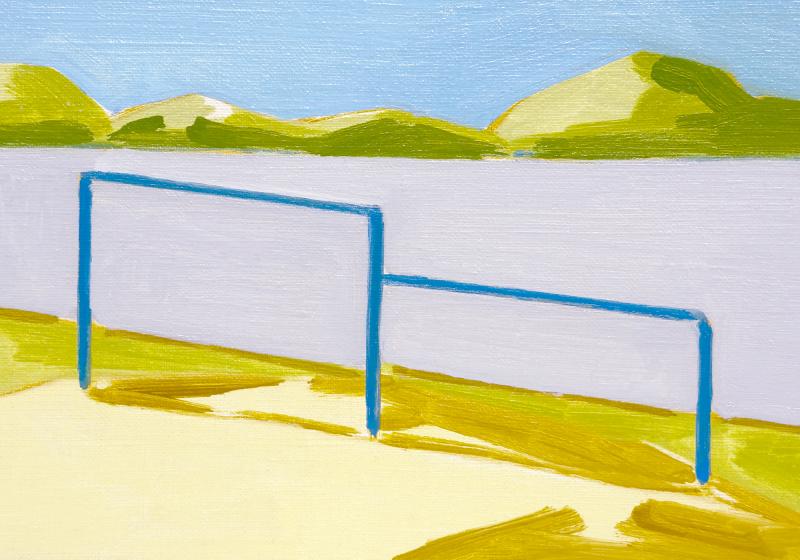
Since then, he's split his time between solo and group shows and editorial illustration work, all of it built on oil paintings of the residential streets and public parks he walks through every day. "I'm especially drawn to the contrast between ordinary man-made objects – such as fences and traffic cones – and the greenery of nature," Naruhiko explains.
"Even the most familiar scenes can reveal unexpected beauty when you pay close attention to their colours and shapes." He counts Matisse, Morandi, David Hockney, Cézanne and Alex Katz among his reference points, drawn to the way each one "transforms everyday subjects into compelling visual forms". We can certainly see those influences shining through in the tones and careful framing Naruhiko puts together on the page. Naruhiko's process is unhurried and precise. Naruhiko photographs scenes on his phone as he moves through the city, then picks out the images with the strongest colour or composition to work from.
From there comes what he considers the real backbone of each piece: a preparatory drawing in yellow ochre, worked and reworked until the unnecessary details fall away. The relationships between colour, shape and space click into place. Tellingly, he doesn't always paint over those ochre lines completely.
"I enjoy the contrast between the areas where the drawing remains visible and those where the paint has been fully built up," he says, "and I hope viewers can appreciate the different qualities these surfaces create within the painting." He keeps his layers thin, too, working in "light, fluid brushstrokes to give the painting a sense of openness and ease". In Quiet Noon, Naruhiko was inspired by a neighbourhood park, pulling elements such as empty playground equipment, three pigeons settled nearby, and plenty of blues, yellows and greens into the artwork.
Article truncated for readability. Read the full piece →
The article discusses a unique artistic approach that can inspire brand strategy, particularly in evoking emotions through relatable imagery, making it relevant but not groundbreaking in the industry.