Score
Autodesk’s AI assistant could radically change how buildings are designed and built
Autodesk's introduction of the AI-powered Autodesk Assistant marks a significant evolution in the architecture, engineering, and construction industries by simplifying the complex process of building design and collaboration. This shift towards an AI-first approach aims to enhance user engagement, streamline workflows, and redefine the roles of architects and construction professionals, ultimately transforming project execution and accountability.
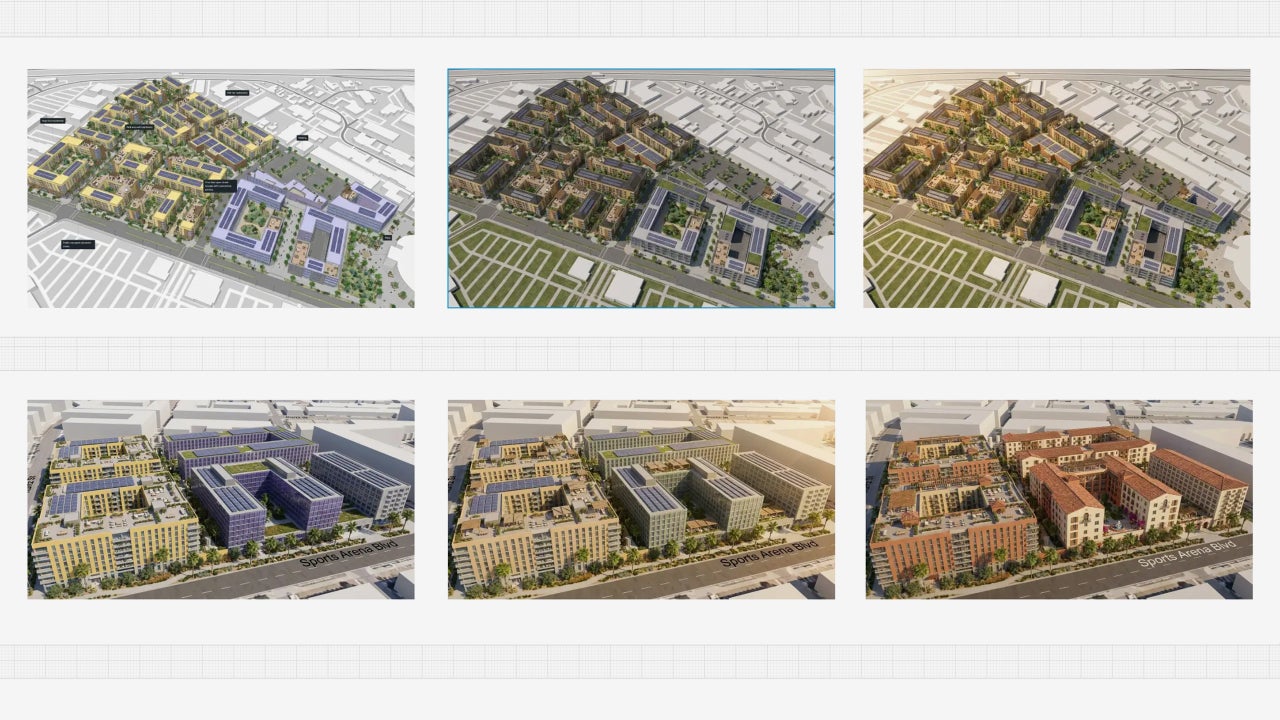
FastCompany: The 3D model behind almost every building project today is as powerful as it is confusing. The precision of digital modeling brings every tiny detail to bear, which is great for building complex architecture, but not so great for the person having to search through thousands of square feet of digital model to find a misaligned beam or incorrect handrail height. Take that same model and toss it into the variously trained hands of engineers, consultants, and contractors and things can quickly go awry. Mistakes can cascade, spanning the spectrum from annoying to very, very expensive.
Autodesk , the software company behind some of the most-used modeling tools of the architecture, engineering, and construction industries, understands this problem because, in many ways, it helped cause it. That’s also why Autodesk is trying to bring the digital building model into a new, less complicated, era. Its new tool, Autodesk Assistant, uses AI to simplify the process of creating and using a 3D building model.
Just announced at the company’s annual Autodesk University convention , Autodesk Assistant uses the power of AI to automate more of the process of making building models and streamline the ways they’re used throughout a project’s lifetime. The core idea behind the tool is to make it easier for the many varied players in the building space to share and interface with the models they so heavily rely upon. [Image: Autodesk] “I don’t know if you’ve ever seen one of our users using some of our software, but it’s hard to build a model,” says Andrew Anagnost, president and CEO of Autodesk. “You have to become an expert in the software.
You have to understand the paradigms. They’ve gotten easier, sure. But it’s still very difficult. Job one for us is deploying AI to push the act of building a model into the background. What we want is the end users, the designers, the planners, the thinkers, to iterate on their problem, not iterate with their design software.” To enable that, Autodesk has spent the past several years building its own AI tools , including a geometry-based AI model called Neural CAD that inherently understands the three-dimensional nature of buildings.
Autodesk Assistant brings that model into a new platform that wraps an entire building project in a layer of AI, with a new platform that allows a user to make queries, adjust designs, track construction progress, and control building operations, all without actually opening any of the complex software behind these processes. “It is an entirely standalone application that is built to be completely dynamic,” says Mike Haley, senior vice president of research at Autodesk.
“It uses this huge orchestration layer that we’ve built that can mitigate between using a frontier model for a specific thing, to switching to Neural CAD for something, and to bring all that data and all of that context together, completely invisibly to you.” Haley says the tool reconsiders the entire stack of design software “from an AI-assisted scenario to an AI-first scenario.” [Image: Autodesk] How it works On a recent video call, Autodesk distinguished experience architect Michelangelo Capraro pulls up the platform to demonstrate how it works on a hypothetical apartment project.
Article truncated for readability. Read the full piece →
The introduction of an AI assistant by a major player like Autodesk is likely to have a significant impact on the architecture and construction industries, offering novel solutions that are highly relevant to brand strategy professionals focused on innovation and efficiency.