Score
I Questioned Twas Use Of Ai Illustration In A Branding Project Heres Their Fascinating Response
The use of AI in branding, as demonstrated by TWA's project for the voice-journalling app Untold, signifies a shift in brand strategy towards creating dynamic visual systems that evolve with user interaction. This approach not only enhances user experience but also raises important questions about human authorship and the role of designers in the creative process, suggesting that future branding may increasingly rely on AI to generate responsive and personalized content.
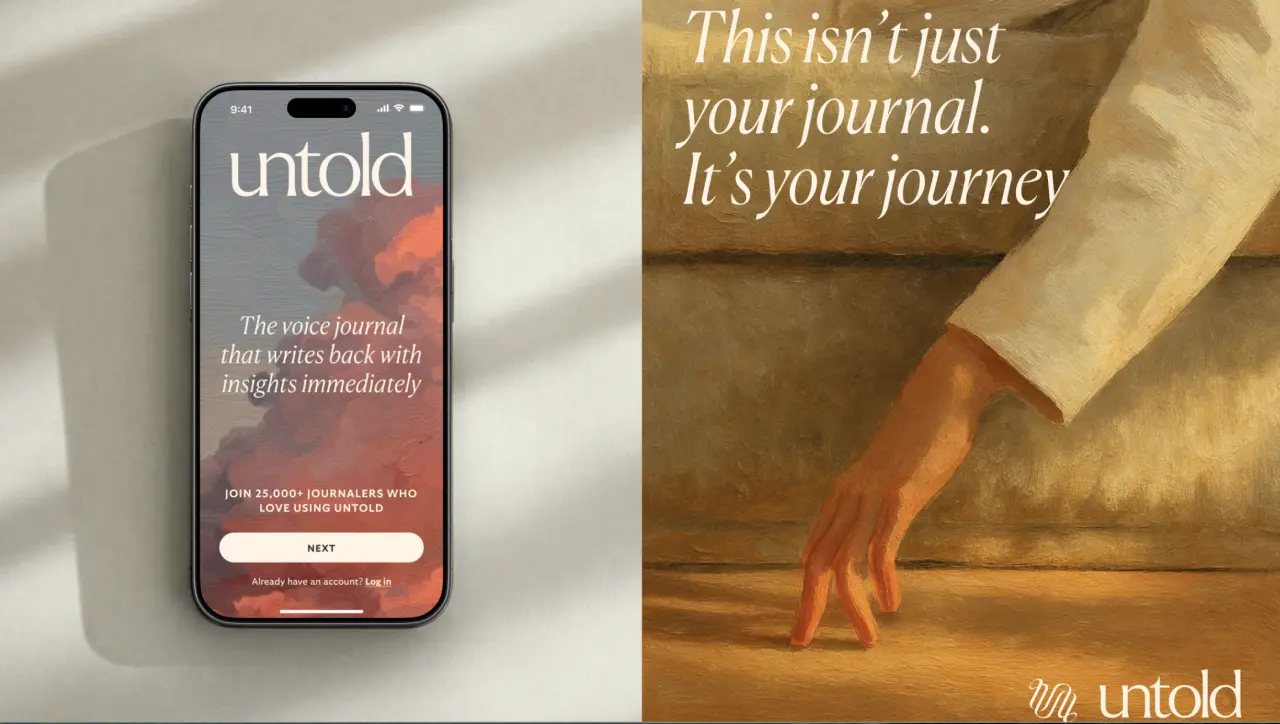
Creative Boom: I questioned TWA's use of AI illustration in a branding project: here's their fascinating response The Working Assembly used AI in its branding for Untold, but not in the way you might think. Last week, I wrote a critique of The Working Assembly's new identity for voice-journalling app Untold. The article was broadly favourable, but questioned the team's use of AI illustration over a human illustrator. I ended by asking Creative Boom's audience what you thought of this, and graphic designer and motion artist Michela Bruno sent this thoughtful response: "My answer is actually a question.
I can't make up my mind without knowing this first: why haven't they commissioned the paintings to an illustrator and decided to do them in AI?" It's a good question. A very good question. And I've got to be honest, one I should have put to TWA directly before publishing my opinions. A case of "eagerness to meet deadline" overcoming good journalism and common sense. Mea culpa. That said, I figured: better late than never. And so I got in touch with Jolene Delisle, founder of The Working Assembly, to do just that.
Her answer was a fascinating one; so much so that, rather than tagging it on to the previous article as an afterthought, I felt it deserved an article all by itself. Why they used AI "For us, it wasn't really AI versus an illustrator or about replacing an illustrator," begins Jolene. "It came from what we were trying to build for Untold. The illustrations in the system are meant to respond to what people are expressing—their emotions, thoughts, and experiences—and evolve as the product is used.
Rather than creating a fixed library of illustrations, we wanted to build a visual system that could continue to respond to the person using it." She goes on to explain in more detail how the artwork was generated. "We started with a human-created visual reference and then built a custom AI agent around a very specific set of creative rules and guardrails. It wasn't just asking an image generator to make paintings. We were designing a visual language and then building a way for that language to continually evolve. "In some ways, I think of it as an extension of what brand guidelines have always been intended to do," she reflects.
"You create a visual language and a set of rules so that a brand can continue to make new things without the original designer creating every single asset. Here, we encoded those rules into a system that could respond dynamically to what people were sharing with Untold. That responsiveness was a big part of the idea. We weren't looking for a cheaper way to produce a set of illustrations." Acknowledging the tension As a creative herself, Jolene understands why this might not sit right with everyone. "I get the tension in something so human, like someone's voice being visually interpreted by a machine," she explains.
"I don't think we shied away from that tension there. To me, it's actually one of the more interesting things about the project and it raises questions about where human authorship begins and ends in a system like this. "We work with and commission illustrators, photographers, artists, and makers all the time," she adds. "So this wasn't a decision that those people were somehow less valuable. It was about what made sense for this particular experience. The distinction is that we didn't use AI simply to replicate something we would otherwise have commissioned someone to make.
Article truncated for readability. Read the full piece →
The article discusses a significant shift in branding practices through the use of AI, which is highly relevant and novel for brand strategy professionals, particularly in understanding the evolving role of technology in design.