Score
This clever art project lets you feel how high the rent is
The art project 'Ground Truth' by Justin Blinder uses a device attached to e-bikes to create physical resistance based on neighborhood rent affordability, transforming abstract housing data into a tangible experience for riders. This innovative approach highlights the disparities in economic conditions across New York City, prompting a reconsideration of how urban mobility and housing policies intersect, which is crucial for brands involved in urban development and mobility solutions.
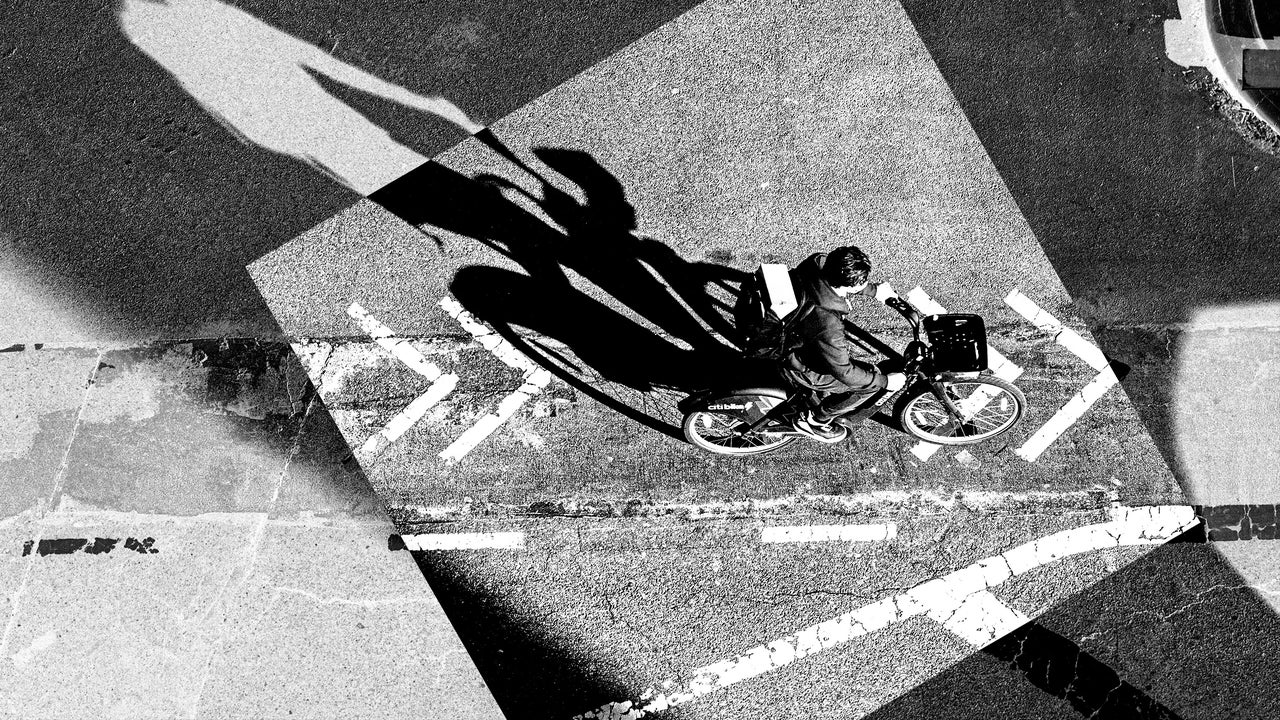
FastCompany: While biking the perimeter of Prospect Park in Brooklyn on a sunny August afternoon, the pedal strokes are smooth. On the Citi Bike, I ease through all of Park Slope and most of Windsor Terrace, but as I bike through Prospect Lefferts Gardens, also known as Flatbush, tension builds. When I enter the park at Lincoln Avenue, where Flatbush begins, there is a massive shift in my ability to move. It is jarring, and I’m forced to dismount. I’m riding around with a device attached to the e-bike that manipulates the brakes depending on the levels of rent affordability in the neighborhood you’re biking through.
The device is an artwork called Ground Truth , Justin Blinder’s latest creation and part of an exhibition with the same name that closed on August 2. Blinder is a researcher, biker, scientist, and, at his most vivid, an artist. The exhibition explores New York City’s affordability crisis and, through the device, makes the disparities felt on a physical level. While the device is not publicly available, he created it for both the Lyft manual and e-bikes and has biked more than 35 miles across New York City with it installed.
[Image: Ground Truth] This work was made possible with money from Idle Hands , an art incubation program founded in 2025 by Linden Renz and Gabrielle Sirkin. Blinder was the Idle Hands Incubation award’s inaugural winner, cashing out $10,000 and loads of professional support to make Ground Truth a reality. [Image: Ground Truth] The device uses data from the U.S. Census Bureau’s American Community Survey on rent-burdened neighborhoods. Once attached to any Lyft Citi Bike, it draws on GPS and the housing-affordability data to create physical resistance for riders in cost-burdened neighborhoods, easing up in more affordable ones.
A resident is considered rent-burdened if they pay 30% or more of their monthly income toward rent. Blinder got the idea for Ground Truth while working as a food delivery bike rider struggling to make ends meet. He was impacted by how starkly the financial realities of people living in New York City contrasted with one another despite living in such close proximity. [Photo: Ground Truth] “There were so many extremities just within small regions. To me, that’s just such a fascinating aspect of the crisis,” Blinder tells me.
“You can be in one block where people are significantly less rent-burdened and go to another where it’s totally a different story.” This isn’t Blinder’s first time translating data into a physical experience. During the early years of the COVID-19 pandemic, Blinder created a computer malware program called Pandemic Pulse that would slow down his computer’s CPU in proportion to local infection rates, and dim the computer screen based on the rate of local deaths. “Every morning I remember going to The New York Times homepage and seeing the COVID infection rates, and it’s basically just, like, charts and a map.
But all of that [information], at the end of the day, is people. . . . All of these people have family members. There’s a story behind them,” Blinder says. The malware would interrupt his work and make it harder to see his computer or use it at all on days when the numbers were particularly high. Blinder has spent more than a decade examining how dominant technologies shape public understanding of inequality, and Ground Truth is no exception. By physically experiencing this resistance while cycling through different New York City neighborhoods, riders embody tension.
Article truncated for readability. Read the full piece →
The project creatively merges art with urban economic issues, making it significant for brands in urban development, while its unique approach offers fresh insights into housing disparities.