Score
Inside Mill’s AI-powered plan to help restaurants and grocery stores stop wasting food
Mill's innovative approach to reducing food waste in commercial kitchens through AI-powered technology and user-friendly design represents a significant shift in brand strategy for sustainability-focused startups. By addressing a critical environmental issue while enhancing operational efficiency for restaurants and grocery stores, Mill positions itself as a leader in the food waste management sector, appealing to eco-conscious consumers and businesses alike.
FastCompany: Over the last year, the design team at Mill has logged hundreds of hours in commercial kitchens studying one of the least visible parts of back-of-house operations: what happens to the trash. The startup, which has raised more than $250 million since launching in 2020, is known for making a bin for home kitchens that dries and shrinks food waste . But companies like Whole Foods soon started asking for a version of their own. Of the 74 million tons of food that’s thrown out each year in the U.S., around a quarter comes from restaurants and grocery stores.
[Photo: Mill] That’s both a major source of emissions and a significant cost for businesses with tight margins. But Mill is betting that better product design can help tackle the problem—and that unlike many climate challenges, reducing food waste can be relatively straightforward. “Food waste is one of those kinds of opportunities of massive scale impact that really is win-win across the board and is a solvable problem,” says Mill CEO and cofounder Matt Rogers, who pivoted to the challenge of waste after working on the original iPhone at Apple and cofounding Nest. “This is not fusion. This is not space travel.
This is not putting food in the trash.” The company’s new commercial product, under development now, tackles the problem from two angles. First, it turns kitchen scraps into a lightweight, non-smelly material that can be delivered to farms for use as chicken feed or composted. But the bins also use AI to analyze exactly what’s being thrown out—and help kitchens make changes to throw out less in the first place. [Photo: Mill] How Mill’s system works Inside Mill’s sprawling office south of San Francisco, multiple prototypes show how the device works. Like the consumer version, it starts by dehydrating food scraps.
“The first thing we do is we pre-process food waste,” says cofounder Harry Tannenbaum. Tannenbaum says 25% of the landfill is food and 80% of food is water—an insight that shaped the development of Mill. “If you take the water out of food, it gets really small,” he says. You can quickly turn it into something that looks like coffee grounds and smells like spices, and it’s easy to manage and a valuable resource.” That approach convinced Whole Foods to reach out to Mill in 2024 as it looked for ways to cut food waste in half by 2030.
“The major differentiator between Mill Commercial and other solutions was the on-site processing…the grind and dehydrate process allows us to reduce the volume of our food scraps by 80% on average, which will make it easier for our team members to handle, store, and transport,” says Cameron Crake, circularity lead for Amazon’s worldwide grocery team, which includes Whole Foods. Rather than just making a larger version of the consumer bin for commercial use, Mill realized that it could go a step farther.
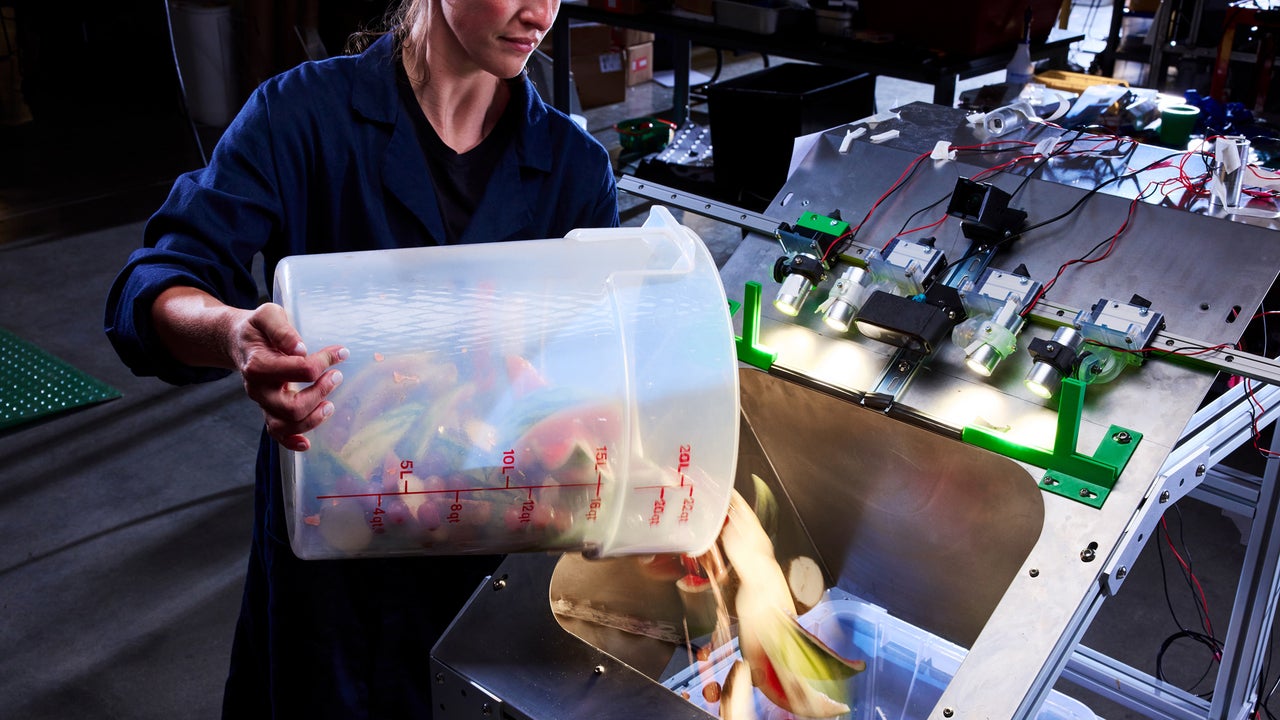
By adding cameras to the bin and using AI, it’s possible to identify the food scraps so a restaurant or grocery kitchen can get a detailed report of exactly what’s being thrown out. The team showed me how it worked on a test rig where they’re calibrating the computer vision system. [Image: Mill] After someone dumped in a bucket of scraps, I watched the results show up on a computer screen—1.5 pounds of watermelon rinds, half a pound of potatoes, half a pound of grapes, and a metal fork.
Article truncated for readability. Read the full piece →
Mill's AI-powered approach to food waste management is highly impactful for the brand/design industry as it addresses a pressing environmental issue while offering a fresh solution that resonates with sustainability-focused professionals.
Weekly digest
Get the Signal digest
Every Monday morning — the top 3 brand trends, 10 high-signal articles, and one emerging signal to watch.
No spam. Unsubscribe anytime.