Score
How GM is shaping the future of car design, one Corvette at a time
General Motors (GM) is leveraging concept cars, particularly the Corvette CX, as strategic tools to shape the future of automotive design amidst increasing competition and evolving consumer preferences. These vehicles serve not only as aspirational prototypes but also as critical feedback mechanisms for gauging market interest and guiding future production models, thus reinforcing GM's brand identity and innovation in a rapidly changing industry.
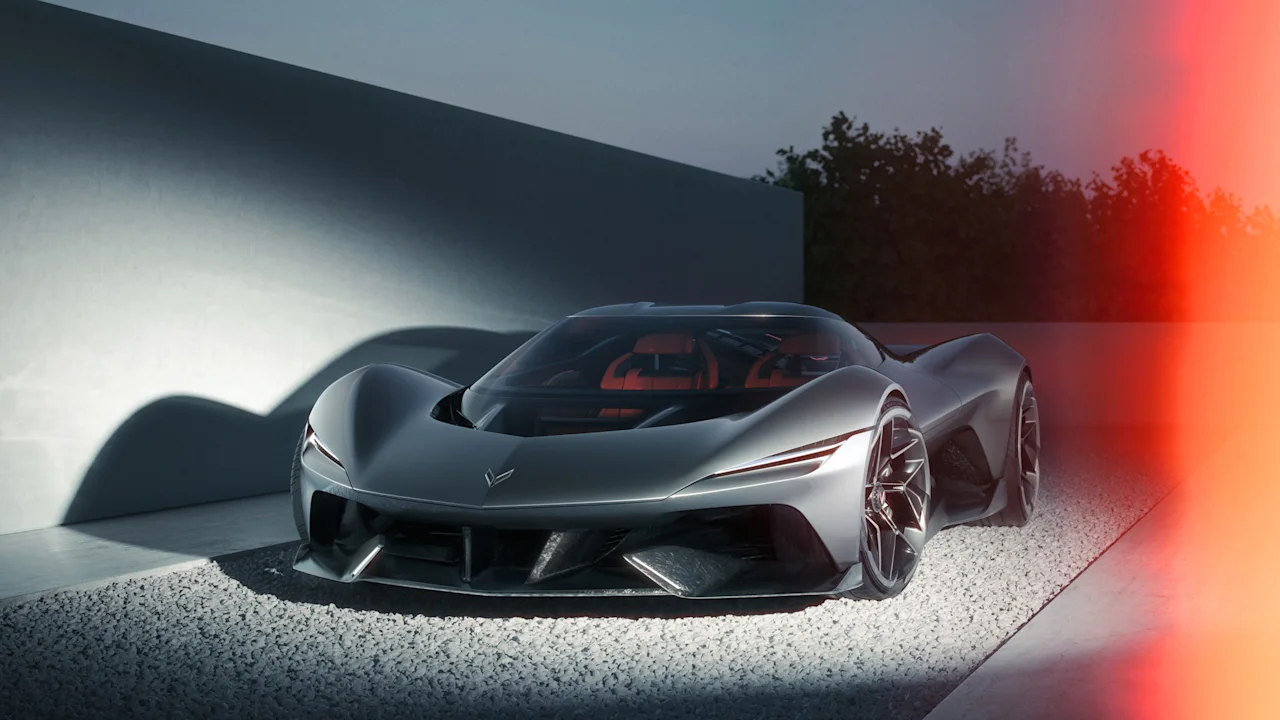
FastCompany: I’m standing in a showroom at the new General Motors design headquarters outside of Detroit resisting the urge to reach out and touch something. In front of me, there’s a Corvette CX, a one-of-one experimental sports car that the automaker has meticulously handcrafted to look both silky smooth and fast as hell. As I crouch down to see just how low this low-riding car would drive, the roof of the Corvette CX lifts up in front of me and opens like the cockpit of a multimillion-dollar fighter jet. The robotic precision of the sculpted body opening up is pure spectacle atop the shock-and-awe of the car itself.
GM designed this all-electric “hypercar” to be action-movie-ready. It’s capable of running on regular roads and high-speed racetracks, with 2,000 horsepower coming from individual motors for all four wheels. The skeleton chassis and interior structure are made of ultralight carbon fiber. Wind-turbine-like fans draw air through the open-channel bodywork. And just when a tight curve might jar the nerves of the whitest-knuckled of drivers, an adjustable rear spoiler optimizes aerodynamics in real time.
The Corvette CX is an ostentatious tour-de-force of advanced engineering, design, and manufacturing that took a team of hundreds three years and undisclosed millions of GM’s nearly $70 billion market capitalization to create. So it’s a strange feeling, standing next to this singular vehicle, to be one of only a relatively small number of people who will ever actually see it up close. [Photo: GM] This is the curious condition of the modern concept car.
Long past the prime of in-person auto shows where members of the car-buying public would gawk at futuristic prototypes, the concept car of today sits physically in near isolation, more an image for social media than a social experience. Concept cars are both more and less visible now, and their long-established brand-building purpose is in question. But as visions of the future, they are increasingly important crystal balls. During my recent visit to GM’s main design facilities, it was clear that concept cars like the CX are more than just sneak previews for thirsty car collectors.
With growing competition from emergent automakers in China, the on-again-off-again embrace of electric vehicles in the U.S., and a long tail of industry-wide uncertainty connected to the Trump administration’s tariffs, the automotive industry is in one of its most dynamic periods in recent memory. Concept cars like the CX offer car designers a concrete aspiration for what they and the company want the future of cars to look like.
“If you don’t create the beacon,” says Bryan Nesbitt, GM’s new senior vice president of global design, “you just spin and spin and spin.” A vision of the future These conditions explain why, depending on how you count, GM released three or four versions of a concept Corvette in 2025 alone. Under the watch of Michael Simcoe, the recently retired GM design chief, the company embarked on a multi-studio design effort to create new visions for the venerable Corvette sports car brand, which first launched in 1953.
Article truncated for readability. Read the full piece →
The article discusses GM's strategic use of concept cars, which is significant for the automotive design industry and brand strategy, while offering insights that are highly relevant for professionals in the field.